Octopi Poker Studios:
Making poker learning
accessible worldwide
Octopi Poker Studios builds advanced training tools for no-limit Hold'em players who want to study the game seriously. As their audience expanded beyond English-speaking markets, the team needed a structured way to manage translations without slowing product development. By integrating SimpleLocalize into their engineering workflow, they scaled from one language to four while keeping full control over quality and releases.
About Octopi Poker Studios
"Our mission is to make high-quality poker study accessible, effective, and enjoyable—combining advanced training tools with curated content from experienced pros.
— Vladimir Kuzmin, Octopi Poker Studios
Octopi Poker Studios is a poker education platform serving both serious grinders and ambitious recreational players. The product combines simulations, solvers, and interactive tables with structured learning content developed alongside professional players.
What differentiates Octopi Poker is not just the tooling, but the way features are built. Product decisions are informed by active poker professionals and implemented by experienced engineers. New functionality is validated carefully before release, ensuring that learning improvements are measurable and technically sound.
That discipline became especially important when the company decided to expand beyond English-speaking users.
The challenge: Expanding globally without disrupting development
When Octopi Poker launched, the platform was available only in English. As demand from international users grew, the team began translating content manually.
This approach quickly revealed limitations:
- Many strings were hard-coded in the application.
- Extracting text for translation required manual effort.
- Context for translators was inconsistent.
- Localization happened outside the normal release cycle.
"Before SimpleLocalize we had many hard-coded strings and manual steps, which made tracking, handing off, and reviewing translations slow and error-prone."
The team wanted multilingual support, but not at the cost of development speed or release quality. Localization needed to become part of the product workflow, not an afterthought.
Making localization part of the release cycle
Rather than treating translation as a separate process, Octopi Poker integrated it directly into development.
Their workflow now follows a clear structure:
1. Automated key synchronization
When UI changes are developed, text keys are captured and synchronized into SimpleLocalize via automated tooling. This ensures that all translatable content is tracked without manual effort.
"When UI changes are developed, text keys are captured and synchronized into SimpleLocalize via automated tooling."
2. Context-aware translation and internal review
Translators work directly in SimpleLocalize, using context provided by the team. Translations are reviewed internally, including by leadership, before approval.
This combination of automation and human oversight ensures that poker terminology and product language remain precise.
3. Controlled promotion across environments
Translations move through development → staging → production. This staged rollout mirrors the engineering workflow and prevents unfinished content from reaching users.
"This makes localization a routine part of our release cycle rather than a separate manual effort."
By aligning translation with product releases, localization became predictable and manageable.
Features that made the difference
Octopi Poker highlights several aspects of SimpleLocalize that supported this shift:
- Developer-friendly automation
CLI and pipeline support allow keys and translations to stay synchronized without extra engineering overhead. - Environment separation
Clear boundaries between development, staging, and production help control what gets released and when. - Flexible API and integrations
The system fits into existing engineering and content workflows rather than forcing process changes. - Responsive support
When questions arise, support is available quickly; important for a small, focused team.
"SimpleLocalize helped by centralizing translation management and enabling automation so our team could move faster."
Results: From one language to four
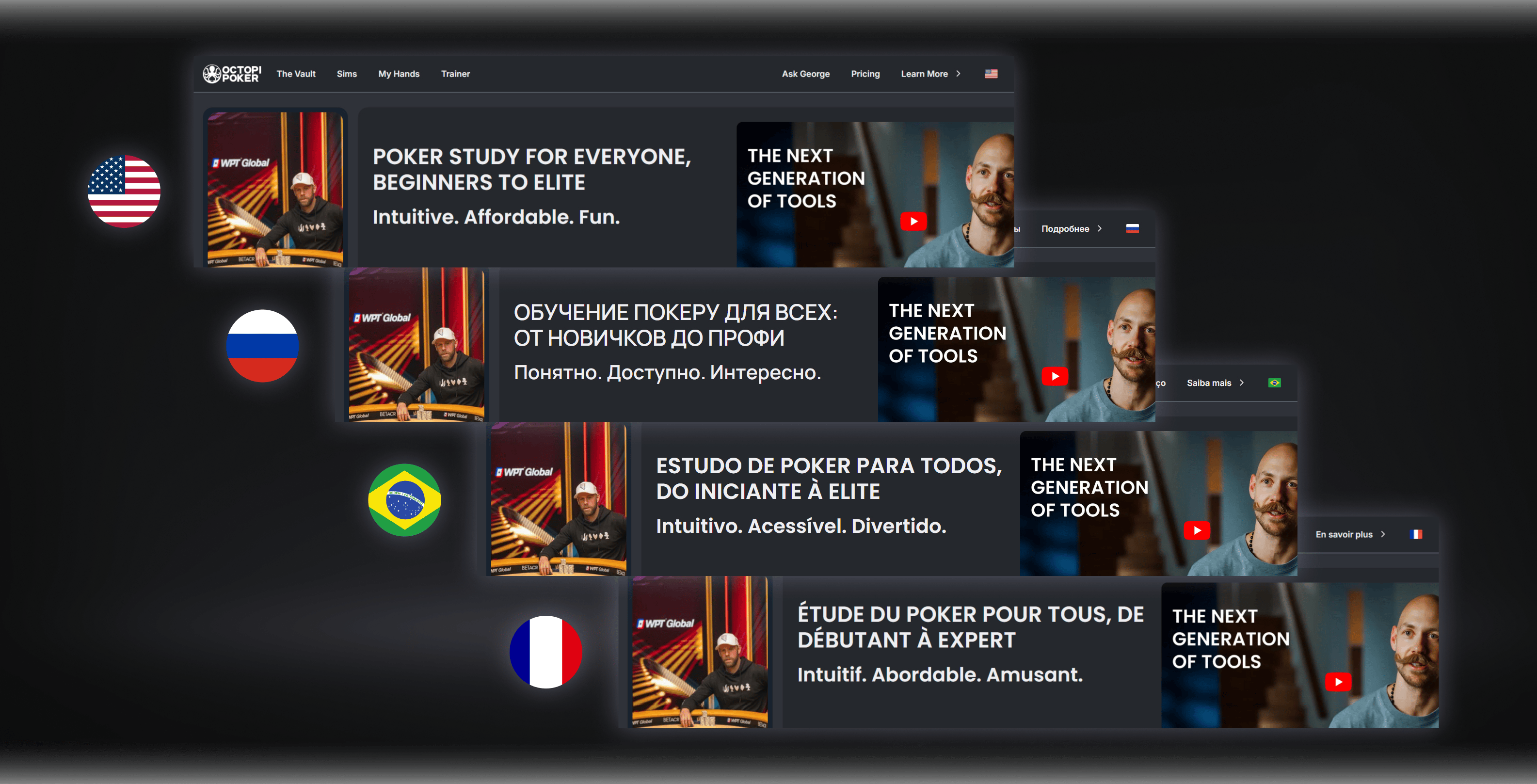
Since implementing SimpleLocalize, Octopi Poker has expanded from one language to four: English, French, Portuguese, and Russian.
The operational impact has been clear:
- Translation cycles are faster.
- Reviewers have clearer context, reducing misunderstandings.
- Localization no longer delays releases.
- Responsibility for translations is structured across teams.
"Faster translation cycles, fewer misunderstandings during translation because reviewers have clearer context, and smoother operational workflows."
Beyond workflow improvements, the team sees localization as a long-term strategic investment.
"A relatively small percentage of the world's population is fully comfortable using software exclusively in English. If companies want to reach broader audiences, they need to adapt their products to the linguistic and cultural expectations of different regions."
For Octopi Poker, supporting multiple languages strengthens accessibility, trust, and global reach, not just short-term metrics.
Advice for teams starting localization
Vladimir recommends beginning with a contained experiment rather than a full rollout:
"Start small and iterate. Run a single page or feature through the full localization flow—key extraction → translation → review → deployment—to validate your automation and reviewer workflows before scaling."
Automation can accelerate the process, but human review remains critical, especially for domain-specific products like poker training, where terminology and nuance matter.
The goal is not just translation, but clarity.
Language selector: Small detail, real impact
Octopi Poker's language selector is simple and visible. A flag icon indicates the current language, and a dropdown allows users to switch between available options.
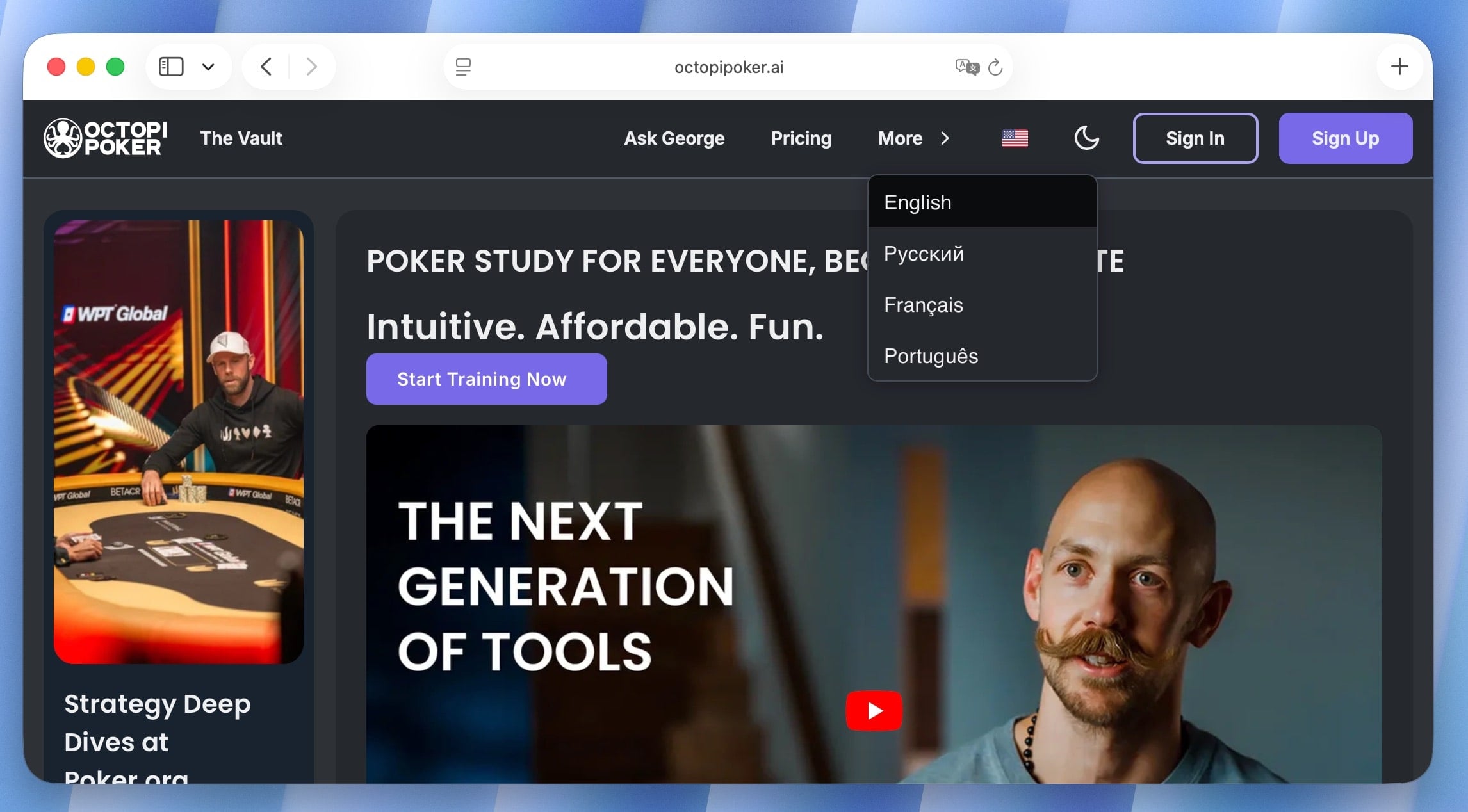
The team also pays attention to locale accuracy. For example, Portuguese is presented specifically as Brazilian Portuguese (pt-BR), aligning with their target audience rather than using a generic label.
These details signal intent: localization is not treated as a cosmetic addition, but as part of delivering a product that feels native to its users.



Senior Software Engineer, Octopi Poker Studios
Get started with SimpleLocalize
- All-in-one localization platform
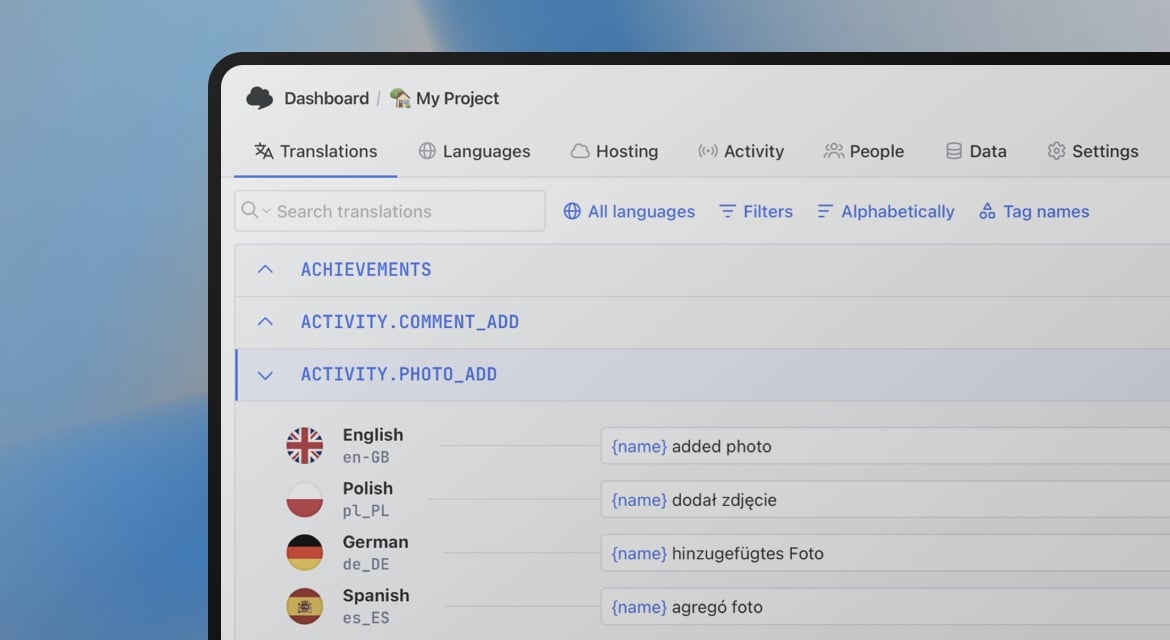
- Web-based translation editor for your team
- Auto-translation, QA-checks, AI and more
- See how easily you can start localizing your product.
- Powerful API, hosting, integrations and developer tools
- Unmatched customer support