Tone of voice and formality across cultures

A translation can be word-perfect and still land badly. The grammar checks out, every term matches the glossary, but native speakers still wince a little when they read it. Most of the time, the problem is tone.
Tone of voice is one of the hardest parts of localization to get right, because it rarely shows up as an error. There is no red underline for "this sounds too casual for a German business audience" or "this greeting feels cold to a Brazilian user". It just reads oddly, and users can't always explain why.
Why tone doesn't travel automatically
English marketing copy has trained a whole generation of SaaS companies to write in a specific register: friendly, casual, first-name, exclamation-point-adjacent. "Let's get you set up!" "You've got this!" "Oops, something went wrong."
That register is a choice, not a default. It happens to work well for a lot of English-speaking audiences, especially in the US. It does not automatically translate into an equivalent choice in another language. Some markets will read casual copy as unprofessional. Others expect exactly that same energy and will find a formal translation stiff and distant.
The mistake teams make is treating tone as something that survives translation on its own, the way a product name or a number does. It doesn't. Tone is a decision that has to be made again for every language, ideally before a single string gets translated.
Formality is grammar, not style
In English, formality is mostly about word choice. You can write "Please enter your email" or "Drop your email below" and both are grammatically identical sentences, just with a different vibe.
Many languages don't give you that flexibility. Formality is built into the grammar itself, and getting it wrong isn't a style miss, it's closer to a factual error.
Examples:
-
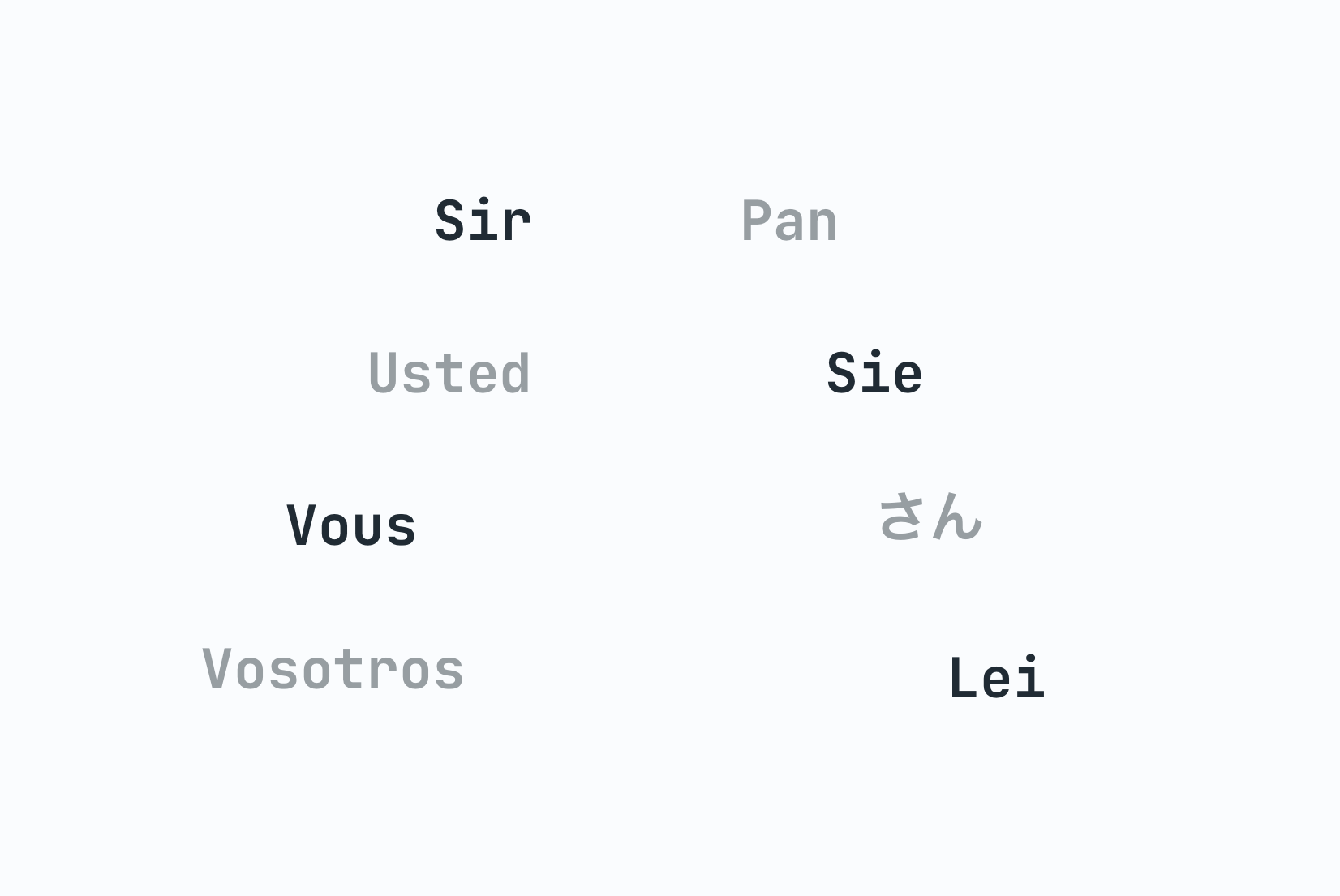
German has du (informal you) and Sie (formal you), and the choice changes verb conjugation, not just word choice. A product that greets a first-time enterprise user with du can come across as presumptuous. Duolingo is a well-known example of a brand that deliberately uses du across its German product to reinforce a playful, approachable identity, and it works because the whole brand is built around that informality. A B2B invoicing tool making the same choice would send a very different signal.
-
French and Spanish have a similar split with tu/vous and tú/usted. Spanish adds an extra layer of regional variation on top: European Spanish leans more formal in commercial contexts than Latin American Spanish, and several Latin American countries, Argentina in particular, use vos instead of tú for informal address, with its own verb conjugation ("vos tenés" instead of "tú tienes"). This means "Spanish" as a single tone decision doesn't really exist. A tone brief written for Spain doesn't automatically hold for Mexico, and neither holds for Argentina without an explicit review of which form to use.
-
Japanese goes several levels further. There isn't just formal and informal, there's a whole system of keigo (敬語), honorific language that shifts depending on the relationship between speaker and listener, including humble forms used when talking about your own company's actions. A UI written in casual Japanese for a productivity app aimed at enterprise buyers will read as amateurish. The same casual register in a mobile game aimed at teenagers would feel exactly right.
-
Korean has a comparable system of speech levels, where verb endings shift based on formality and social hierarchy, and getting it wrong in customer-facing copy is noticeable to native speakers in a way that's hard for outsiders to appreciate.
How to handle this in practice: for languages with grammatical formality, "translate this casually" or "translate this formally" is not optional context you can skip. It's a required input, the same way a character limit or a placeholder variable is required. Leaving it out doesn't produce a neutral translation, it produces a guess.
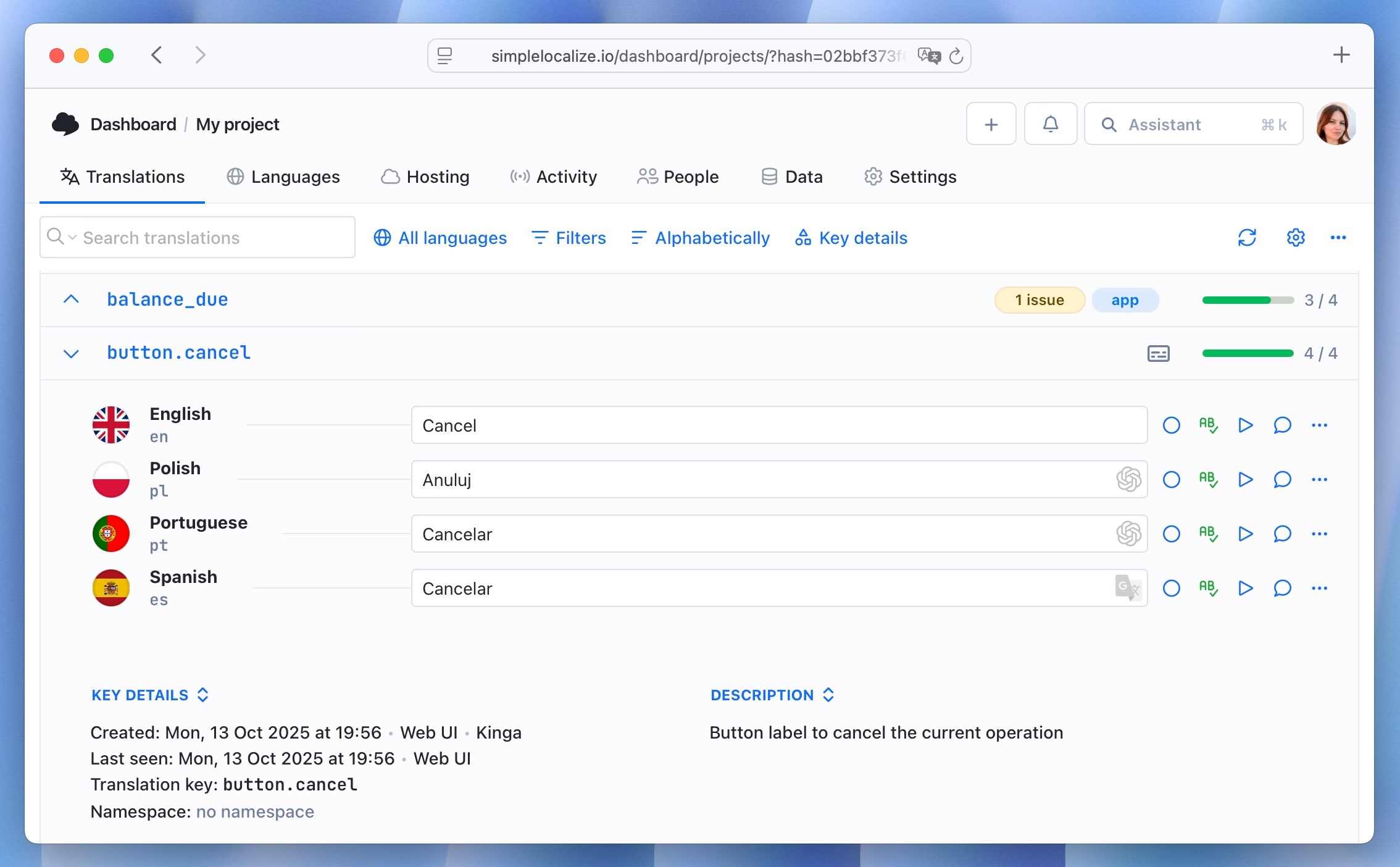
You can provide per-language context in SimpleLocalize for AI translation, so you don't have to repeat the same instructions for every string. If your brand voice is casual in English, you can tell the model "use formal Sie in German" and it will apply that guidance consistently across the project.
Tone decisions go beyond formality
Even in languages without a formal/informal grammatical split, tone still shifts by culture.
- Directness
American and Dutch business communication tends to be quite direct. Japanese and Thai communication often values indirectness, softening requests, and avoiding language that could cause someone to lose face. An error message that says "You did this wrong" translates fine word for word into many languages and still feels unnecessarily blunt in others. - Humor
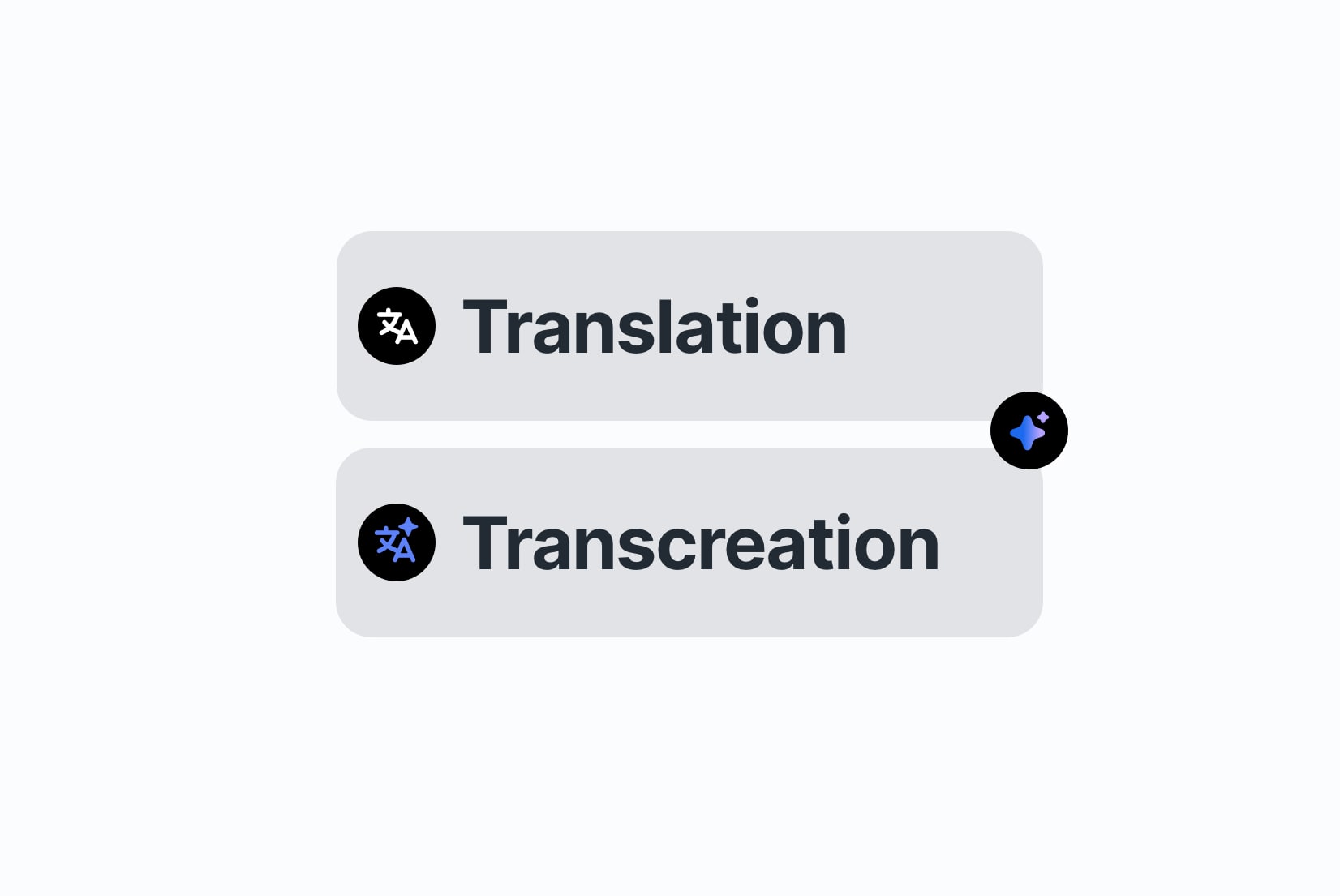
Jokes, wordplay, and pop culture references are some of the least portable content in any product. A pun in an onboarding flow might be charming in English and simply confusing (or untranslatable) elsewhere. This is one of the few areas where transcreation, rewriting content to preserve the effect rather than the literal words, usually beats direct translation. - Enthusiasm
Exclamation points, superlatives, and "you're amazing!" style encouragement are common in US SaaS copy. In markets like Germany or Finland, the same enthusiasm can read as insincere or even a little suspicious. Toning it down is an adjustment to what actually builds trust locally. - Self-reference
How a company refers to itself also shifts. Some markets expect a more formal, third-person "the company" tone in legal or account-related copy, even if the rest of the product is casual.
None of these are things a translator can fix invisibly if they're not told what register you want. They need direction, the same way a designer needs a brand guide.
Building tone into your localization process
The practical fix is to treat tone as project metadata rather than something you hope survives the translation step.
A few things that actually help:
-
Write a short tone brief per language, not per project.
A single "brand voice guide" written in English and handed to every translator produces uneven results, because the guide describes an English-language voice. Ask a native-speaking reviewer or translator: given our brand personality, what does "us" sound like in this language? The answer might be closer to formal-but-warm in German and playful-but-respectful in Japanese, even though the underlying brand is the same. -
Give context at the string level, not just the project level.
A project-wide tone instruction ("friendly and approachable") is a good baseline, but individual strings sometimes need an override. A legal disclaimer, a billing failure message, and a celebratory "you did it!" moment don't all want the same register, even within one language.
-
Use tone and formality instructions where your tooling supports them.
If you're running AI-assisted translation, most modern setups let you attach tone and formality guidance to a project or a key so the model doesn't have to guess. SimpleLocalize's AI translation context engine supports exactly this: you can set project-level tone once, add per-key context for anything that needs a different register, and every AI request inherits it automatically instead of you rewriting instructions each time. It's worth reading more about how context improves AI translation quality if you haven't set this up yet. -
Review with native speakers, not just linguists.
Someone can be a fluent, professional translator and still not be the right person to judge whether copy sounds "on brand" for a market. Where you can, get feedback from someone who actually uses products like yours in that language. -
Revisit tone as you expand.
A tone decision made for your first five languages might not fit market six. Assumptions that held for European markets don't always hold for Southeast Asia, and vice versa. Treat tone guides as living documents tied to specific locales, not a single global rulebook.
A quick example
Imagine a password reset email. In casual American English, it might say:
"Oops! Looks like you forgot your password. No worries, click below to set a new one."
- In German, that same message usually needs Sie and a calmer tone. The helpful part can stay, but the joke should go.
- In Japanese, the message should be polite, direct, and careful not to sound blaming. A softer, more considerate register is often the norm.
- In Spanish, the right choice depends on the market. Mexico, Spain, and Argentina may each expect a different pronoun and level of formality.
Same intent, different markets, different writing choices. None of them are mistakes.
Tone is a strategy decision, not a translation detail
Tone is more than polish. It shapes trust and adoption. A translation can be accurate and still feel off in a given market.
If you're building a localization strategy, include tone and formality early. They belong alongside other cultural choices like color, iconography, and layout, as covered in culture-aware UX patterns. Getting the words right and getting the voice right are two different jobs, and both matter.