Best free translation tools for developers (APIs, TMS & open source)

Building software that supports multiple languages shouldn't be painful or expensive. Today, developers have access to a wide range of free translation tools, from machine translation APIs to open-source editors and developer-friendly localization platforms.
In this post, we focus on tools you can realistically use in development workflows. That means clear free tiers, usable APIs, predictable limits, and honest trade-offs, not just marketing promises.
What “translation tools” mean for developers
In a developer context, translation tools usually fall into one (or more) of these categories:
-
Machine Translation (MT) APIs
Programmatic access to translation engines you can integrate into apps, scripts, or pipelines.
-
Translation Management Systems (TMS)
Platforms that help manage translation keys, editors, automation, and delivery to production.
-
Localization platforms / CAT tools
Tools for translators and contributors, often with translation memory and glossary support.
-
Open-source libraries and platforms
Self-hosted or offline tools that give full control but require more setup.
Each category solves a different part of the localization problem, and many teams combine multiple tools.
Free translation tools developers can use today
Below is a practical selection of free or free-tier translation tools, covering APIs, TMS platforms, and open-source solutions commonly used by developers.
For a broader overview focused purely on APIs, see our list of top machine and AI translation providers.
SimpleLocalize
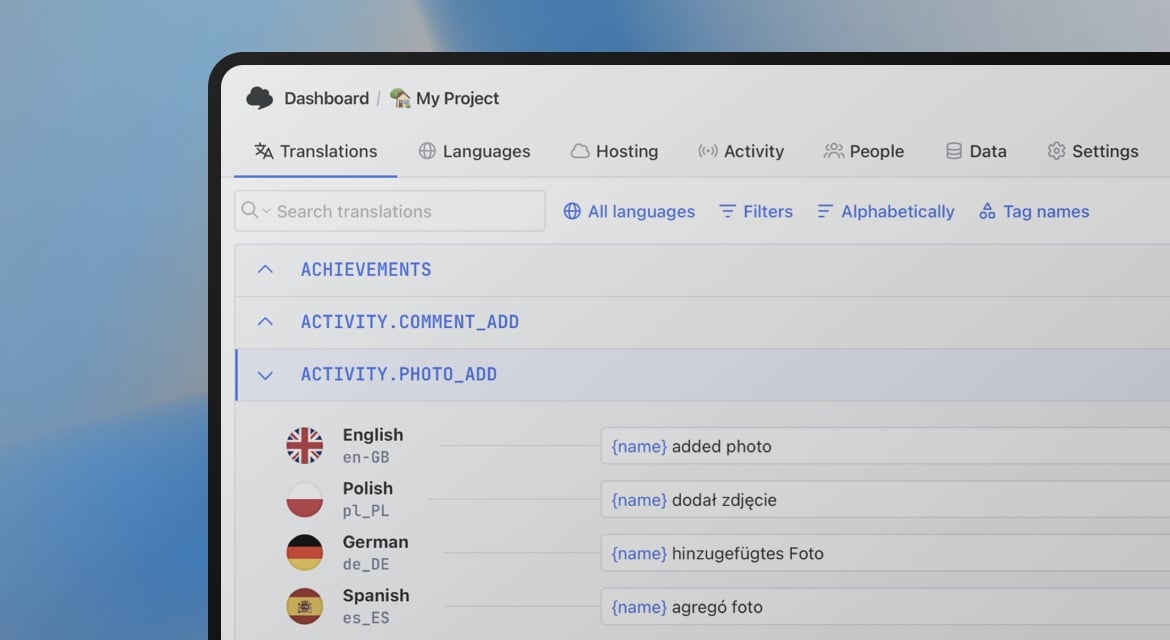
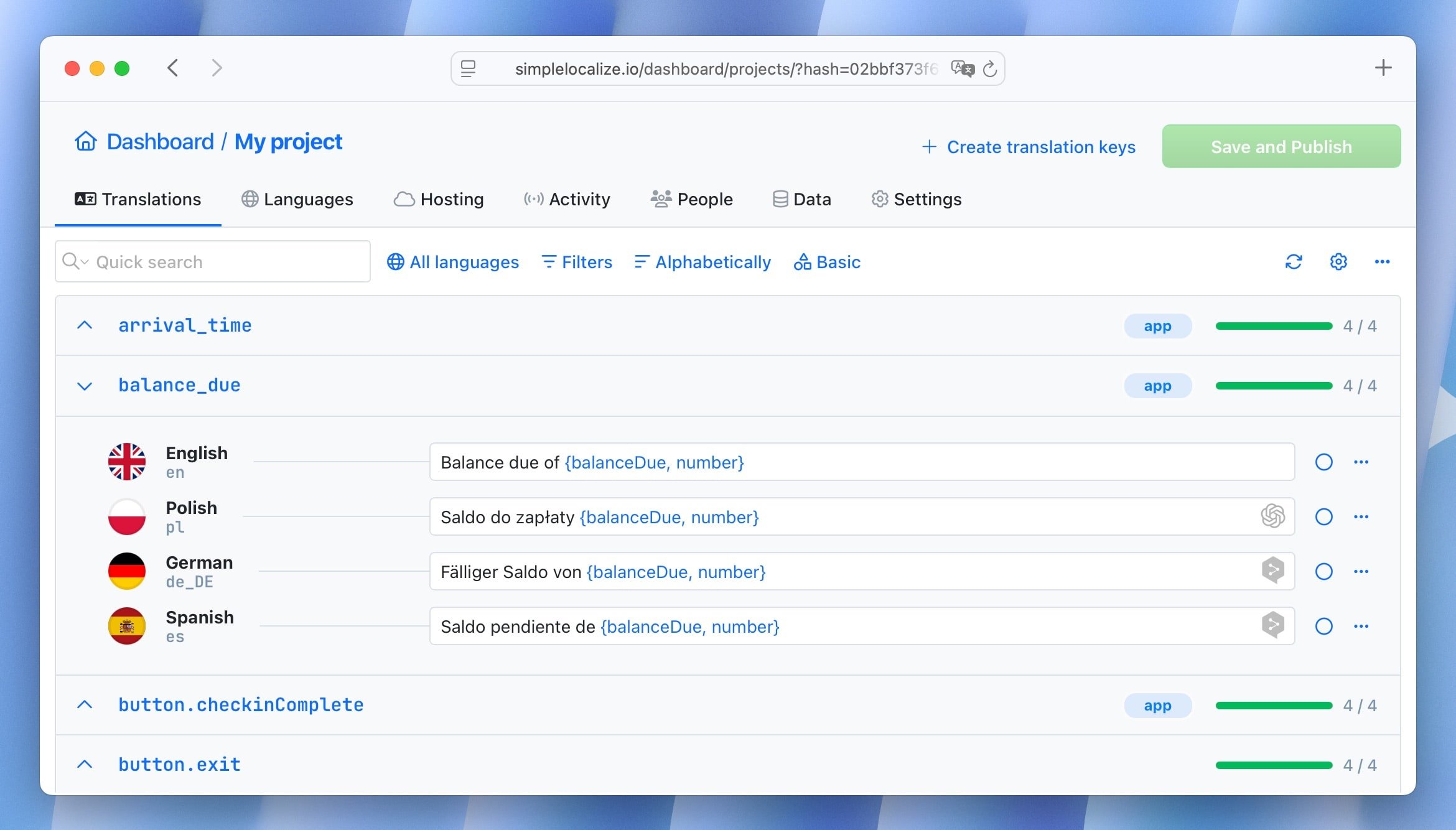
SimpleLocalize is a developer-focused Translation Management System (TMS) designed to fit directly into modern development workflows. It combines a hosted translation editor, automation, APIs, and CDN-based delivery of translation files.
- Category: Translation Management System (TMS)
- Free tier: Community plan (up to ~250 keys, unlimited projects & languages)
- Paid plans: From $15/month for larger projects
- Website: simplelocalize.io
What developers like
- Translation keys hosted and delivered via CDN (no redeploy needed for copy updates)
- CLI and REST API for syncing translations with your codebase
- GitHub, GitLab, CI/CD, and framework integrations
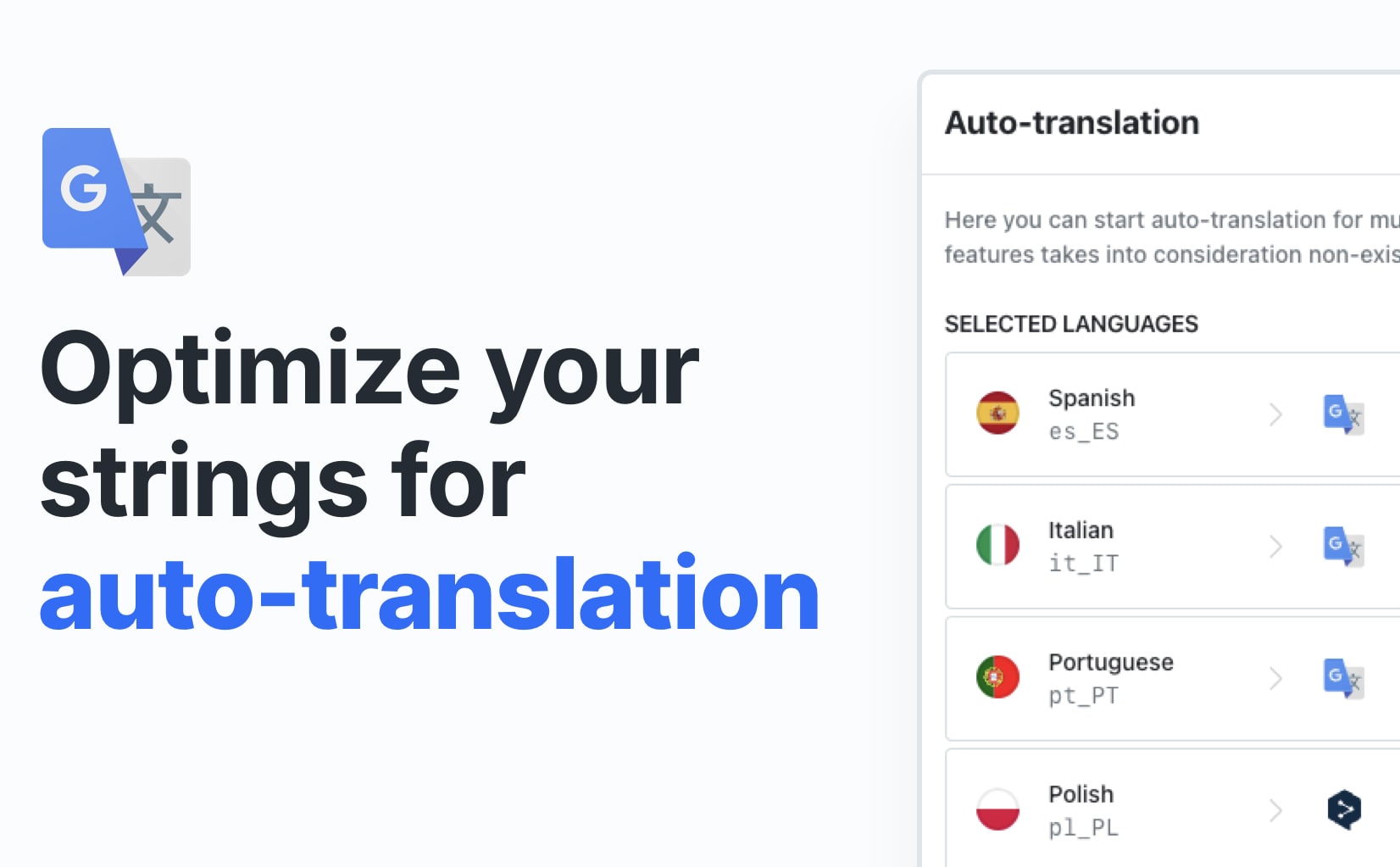
- Built-in auto-translation using your own MT API keys
- Predictable pricing - number of languages doesn't increase cost
- Optional public suggestion links for crowdsourced translations
Limitations
- Community plan is limited to ~250 keys
- Larger apps require a paid plan
When it makes sense
SimpleLocalize works well when you want a lightweight TMS built for developers, not translators, especially if you care about automation, Git-based workflows, and avoiding per-language pricing.
Tolgee
Tolgee is a localization platform and translation management tool with a free tier and optional self-hosting. Like other TMS tools, it offers UI editing, translation memory, and machine translation integrations, but it approaches these features with a different product experience.

- Category: Localization platform & TMS
- Free tier: Free plan (key limits, MT credits)
- Paid plans: Team and business plans available
- Website: tolgee.io
What it offers
- Visual translation editor
- SDKs for various frameworks
- Translation memory support
- Integrated machine translation options
- Self-hosted deployment (open-source edition)
Notes
Tolgee provides many of the typical TMS features you'd expect, such as memory and editing tools. Product experiences differ from platform to platform, but both SimpleLocalize and Tolgee aim to help developers manage translations without heavy manual overhead.
When it fits
Tolgee may appeal if you are specifically looking for an open-source deployable TMS and want to explore different UI and workflow options.
LibreTranslate
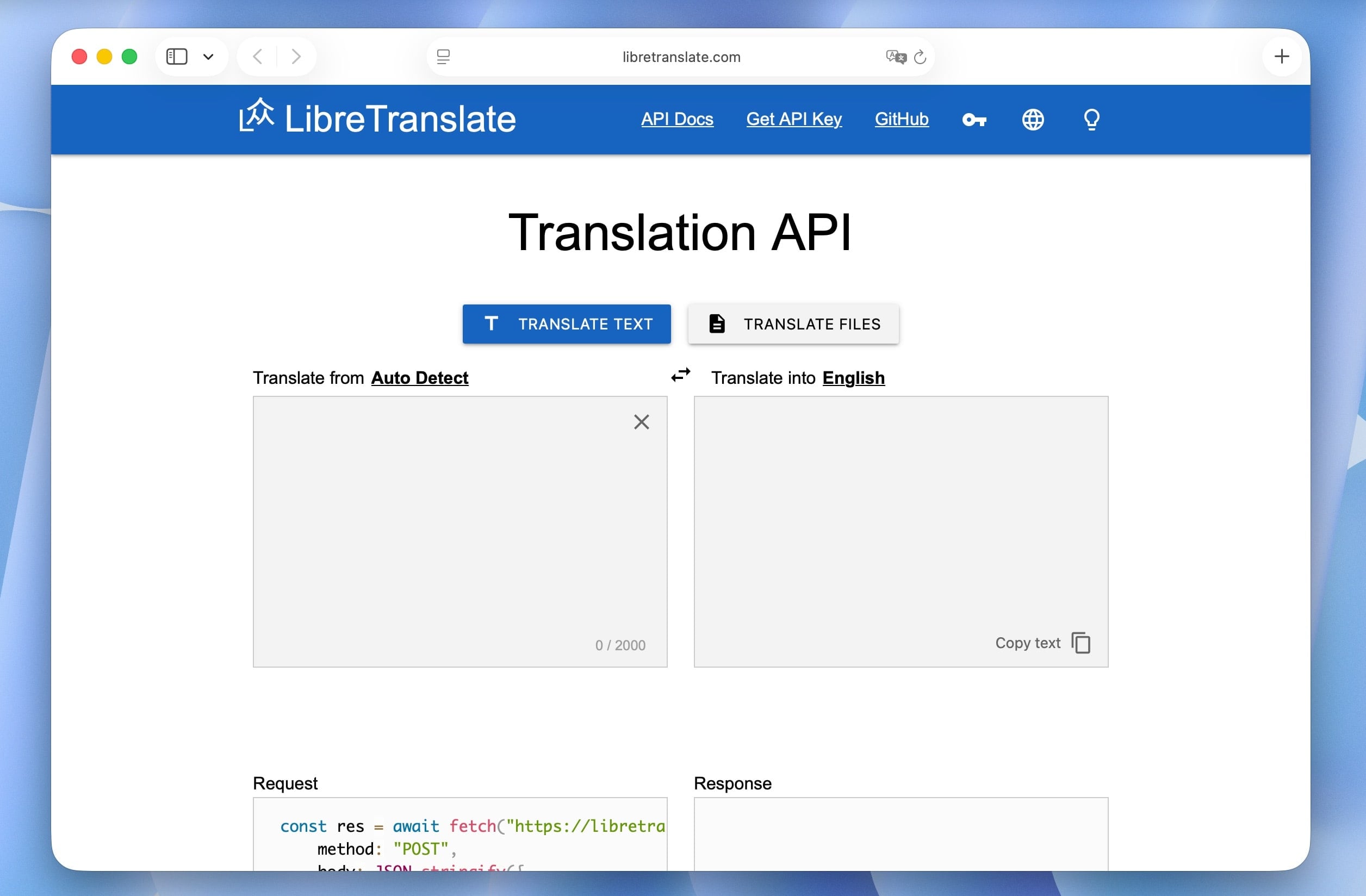
LibreTranslate is an open-source, privacy-focused machine translation API that you can self-host. There are no hard usage limits beyond what your infrastructure can handle, and the API is simple to integrate using JSON requests.

- Category: Machine Translation API
- Free tier: Fully open-source (self-hosted)
- Paid plans: None
- Website: libretranslate.com
What developers like
- No API quotas or usage fees
- Full control over data and deployment
- Simple REST API
Trade-offs
- Translation quality is generally lower than commercial providers
- Language coverage is limited
- You handle hosting, scaling, and maintenance
When it makes sense
LibreTranslate is a good choice for internal tools, prototypes, or privacy-sensitive projects where cost and control matter more than translation quality.
Microsoft Translator Text API
Microsoft's Translator Text API offers neural machine translation with broad language support and a generous free tier. It integrates well with Azure services and supports real-time and batch translation.

- Category: Cloud Translation API
- Free tier: 2 million characters/month
- Paid plans: $10 per million characters beyond free tier
- Website: Microsoft Translator Text API
- Docs: Azure Translator Docs
Benefits
- Large free monthly quota
- High-quality neural translations
- Wide language support
- Reliable for production workloads
Limitations
- Requires Azure account and setup
- Costs scale with usage
When it makes sense
A solid option for apps that need high-volume automatic translation while staying within a predictable budget.
Google Cloud Translation API
Google Cloud Translation is one of the most widely used translation APIs. It supports dozens of languages, automatic detection, and batch translation jobs.

- Category: Cloud Translation API
- Free tier: 500,000 characters/month + $300 free credit for new users
- Paid plans: $20 per million characters
- Website: Google Cloud Translation
- Docs: Google Cloud Translation Docs
Benefits
- Excellent language coverage
- Fast and reliable
- Easy integration with Google Cloud services
Limitations
- Costs beyond the free tier can grow quickly
- Pricing less forgiving for large-scale use
When it makes sense
Good for projects that already use Google Cloud and need broad language support.
DeepL API
DeepL is known for producing especially fluent translations, particularly for European languages. Its API is straightforward and popular for quality-sensitive use cases.

- Category: Machine Translation API
- Free tier: 500,000 characters/month
- Paid plans: From $5.49/month + usage fees
- Website: DeepL API
- Docs: DeepL API Docs
Benefits
- Often higher perceived translation quality
- Simple REST API
- Strong performance for European languages
Limitations
- Fewer supported languages than Google or Microsoft
- Paid usage required beyond the free tier
When it makes sense
Choose DeepL when translation quality matters more than coverage, especially for European markets.
Open-Source localization & editor tools
These tools are not hosted SaaS platforms, but they remain useful in many developer and open-source workflows.
-
Desktop CAT tools with translation memory and glossary support.
-
Web-based, community-driven localization platforms commonly used in open-source projects.
When they make sense
Best suited for offline work, volunteer localization, or community-maintained projects where SaaS platforms aren't desired.
What about AI / LLM-based translation?
Large language models can produce fluent translations, but they are not standalone localization tools. They lack consistent output, glossary enforcement, and change tracking.
In practice, LLMs work best inside a TMS as an auto-translation engine, not as a replacement for proper localization tooling.
Quick comparison
Here is a summary table of the tools discussed:
| Tool | Category | Free Tier | Best For | Self-hosted |
|---|---|---|---|---|
| SimpleLocalize | TMS | Community plan | Developer-oriented localization | ❌ |
| Tolgee | TMS | Free plan + self-hosted | Open-source deployable TMS | ✅ |
| LibreTranslate | MT API | Unlimited (self-hosted) | Privacy & internal tools | ✅ |
| Microsoft Translator | Cloud MT | High free quota | High-volume MT | ❌ |
| Google Translation API | Cloud MT | Moderate free quota | Broad language coverage | ❌ |
| DeepL API | Cloud MT | Moderate free quota | High-quality MT | ❌ |
| OmegaT / Virtaal | CAT tools | Free | Local manual translation | ✅ |
| Translatewiki / Pootle | Open web tools | Free | Community-driven localization | ✅ |
Tips for developers choosing translation tools
- Start small: Free tiers are often enough for MVPs and side projects
- Combine tools: A TMS + MT API usually works better than either alone
- Automate early: Use CLI and CI/CD to avoid manual syncs
- Track quotas: Cloud MT costs can scale quietly
- Optimize for maintainability: Consistency beats perfect translations
Conclusion
Modern translation tooling doesn't have to be expensive or disruptive. Free APIs, open-source tools, and TMS platforms make it possible to localize apps without slowing down development.
A thoughtful combination, like a TMS for structure and automation plus an MT API for volume, helps keep translations lean, consistent, and integrated into your build pipeline. Whether you choose SimpleLocalize, Tolgee, or other tools here, you now have many approachable paths for localizing your software. Happy coding and translating!