SaaS localization readiness checklist: Is your product ready to go global?

Expanding your SaaS product into new markets is not just about translating strings.
Localization affects your product architecture, UX decisions, workflows, release cycles, team ownership, and long-term scalability.
Many SaaS teams start translating too early, before validating markets, preparing their product for internationalization (i18n), or defining clear ownership. The result?
- Repeated translations after UI fixes
- Broken layouts in longer languages
- Manual CSV chaos
- Delayed releases
- Frustrated developers
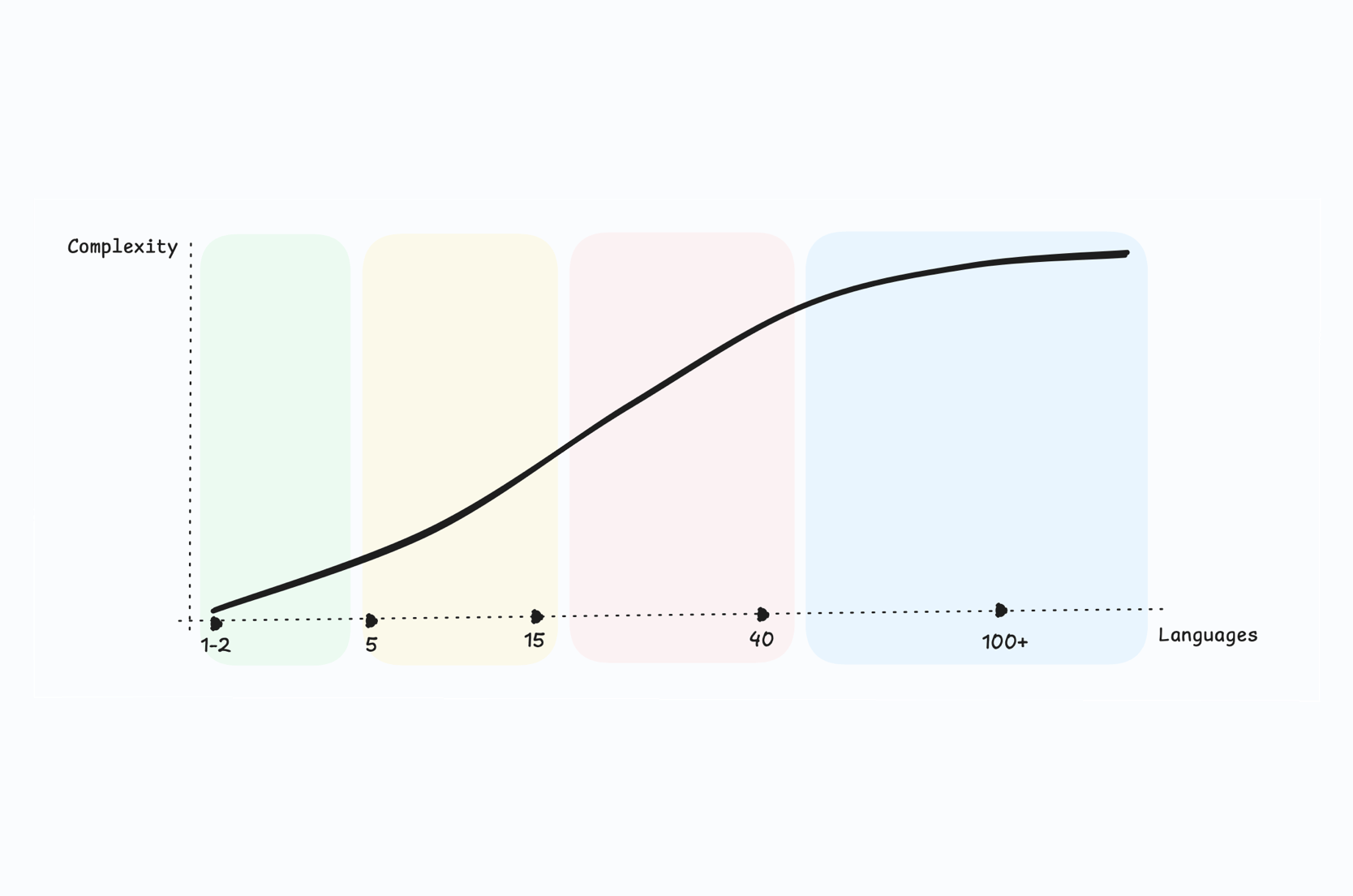
Across the SaaS teams featured in our case studies, the biggest time savings didn't come from faster translation; they came from fixing process gaps before scaling languages.
This checklist will help you assess whether your product, team, and workflows are truly ready.
It complements our in-depth Ultimate Guide to Localization Strategy, and focuses specifically on readiness before execution.
Why assess localization readiness?
Localization problems are rarely linguistic.
They're usually:
- Technical (missing i18n, broken placeholders)
- Organizational (unclear ownership)
- Operational (no defined workflow)
- Strategic (wrong language priorities)
Preparing early prevents:
- Costly rework
- Duplicate translations
- UI refactors after launch
- Coordination bottlenecks between teams
Localization readiness ensures that when you start translating, you do it once, and do it right.
Step 1: Define localization goals (before touching translation)
Before translating a single word, answer these questions:

Why are we localizing?
- Entering a new revenue market?
- Responding to user demand?
- Supporting enterprise clients?
- Improving retention in specific regions?
Localization without a business objective often leads to low-impact languages and wasted budget.
Which markets actually matter?
Use:
- User analytics (traffic by country)
- Revenue by region
- Support tickets requesting language support
- Sales feedback
What is success?
Define measurable goals such as:
- Adoption in specific markets
- Reduced churn in non-English regions
- Improved onboarding completion rate
If you cannot define expected impact, it's likely too early.
Step 2: Product & technical readiness (i18n first, translation second)
The most expensive localization mistake is translating before implementing proper internationalization.

Internationalization (i18n) checklist
- Are all UI strings externalized?
- Do you support multiple plural forms?
- Are placeholders structured properly?
- Do date/time formats adapt by locale?
- Are currencies localized?
- Is RTL (right-to-left) layout supported?
- Is locale switching dynamic or hardcoded?
Learn more: What is internationalization (i18n)?
Real-world observation: Teams that retrofit i18n after launching translations often retranslate the same UI components multiple times due to structural fixes.
UI & UX readiness
Translation expands text by 20-40% in many languages.
Check:
- Button widths
- Modal spacing
- Table layouts
- Mobile responsiveness
- Truncation behavior
- Language selector usability
See also:
Localization failures often appear as UX bugs, not translation errors.
Content scope clarity
Do not translate everything.
Define:
- What must be localized for launch?
- What can wait?
- What content changes frequently?
High-priority areas:
- Onboarding
- Core feature labels
- Error states
- Emails
- Legal pages
Low priority:
- Internal admin labels
- Experimental features
- Rare edge-case screens
Step 3: Workflow & team readiness
Localization is cross-functional by default. If ownership is unclear, scaling will break.

Ownership questions
- Who prioritizes languages? (Product)
- Who implements i18n? (Engineering)
- Who manages translation workflow? (Localization or product)
- Who reviews cultural tone? (Marketing or in-country reviewer)
- Who approves final release?
Unclear ownership is one of the most common bottlenecks we see across SaaS teams.
Workflow structure
Before launching, ask:
- How are strings extracted?
- How are translators notified?
- How are updates handled?
- What happens when features change?
- How are translations versioned?
- Is there QA before release?
If your answer is “we send CSV files manually”, you may be ready for a more structured approach.
Learn more:
Tooling assessment
Options include:
- Manual spreadsheets (temporary)
- Hybrid approach (MT + review)
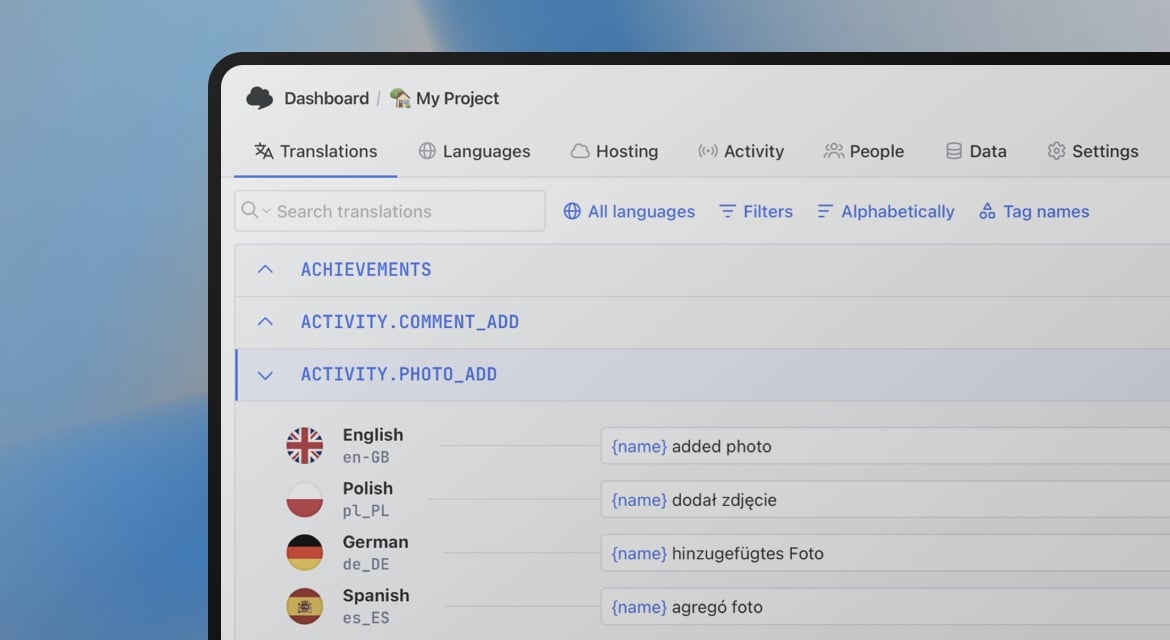
- Translation Management System (TMS)
- CI/CD integration
Teams that centralize translations typically reduce:
- Manual file exchanges
- Lost context issues
- Duplicate strings
- Inconsistent terminology
The goal is not more tools, it's fewer coordination steps.
Step 4: Budget & resource readiness
Localization is not a one-time cost.

Consider:
- Translation model: human translators vs. machine translation (MT) vs. hybrid. MT is faster but may require human post-editing.
- Ongoing costs: feature updates, UI changes, support content, marketing materials.
Tip: Budget for recurring updates. SaaS products with frequent releases need ongoing translation cycles, not a one-time investment.
Ensure your TMS pricing scales with your product size, not with every API call or added language. Check why TMS pricing doesn't have to be expensive.
Step 5: Language & market prioritization

Not all languages have equal ROI. Prioritize based on:
- Revenue potential
- Active user base
- Enterprise demand
- Strategic market expansion
Avoid:
- Adding languages “just in case”
- Translating low-usage regions without validation
- Overexpanding too early
Future expansion should be scalable, not chaotic.
Learn more on how to plan localization for your first five languages.
Step 6: Risks & gaps identification

Use this matrix to evaluate readiness:
| Category | What to check | Example risk |
|---|---|---|
| Technical | Missing i18n support | Date format errors break reports |
| UX | Layout not flexible | German text overflows buttons |
| Workflow | No version control | Wrong translation deployed |
| Ownership | No clear responsibility | Feature ships untranslated |
| Legal | Regional compliance | Missing localized privacy terms |
Localization problems compound over time. Early identification prevents exponential cost later.
Step 7: Readiness score (self-assessment)
Rate each area 1-5:
- Strategic clarity
- i18n implementation
- UI flexibility
- Workflow structure
- Tooling maturity
- Ownership clarity
- Budget planning
If multiple areas score below 3, focus on readiness improvements before launching new languages.
What happens after readiness?
Once you validate readiness:
- Define your workflow.
- Choose appropriate tooling.
- Start with one high-impact language.
- Measure impact.
- Iterate and scale.
Next step: Build a structured localization strategy aligned with product growth.
Downloadable localization readiness checklist
Want a printable version for your team meeting?
👉 Download the full SaaS Localization Readiness Checklist (PDF)
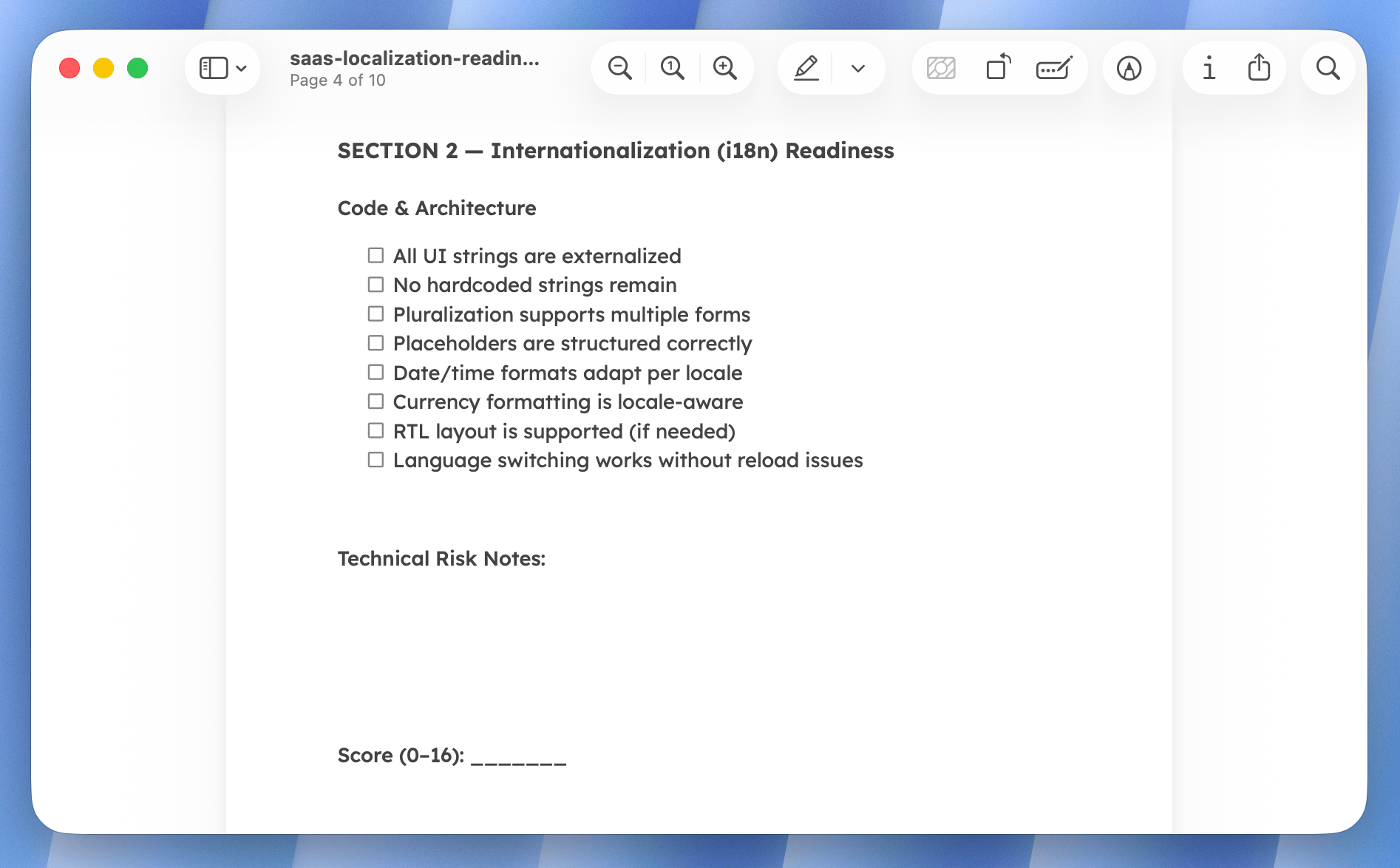
Or copy the checklist below and use it in your own planning document.
Localization readiness checklist
How to use this checklist:
- Gather product + engineering (and optionally marketing).
- Go section by section.
- Score each item:
- Not started (0)
- Partially implemented (1)
- Fully implemented (2)
- Calculate your readiness score.
- Identify weak areas before launching new languages.
SECTION 1: Strategy & market validation
Goals & justification
- We know why we are localizing (growth, retention, expansion, enterprise deals)
- We identified target markets based on data (traffic, revenue, demand)
- We defined measurable success metrics
- We prioritized 1-3 launch languages (not 10)
- We validated product-market fit in primary language first
SECTION 2: Internationalization (i18n) readiness
Code & architecture
- All UI strings are externalized
- No hardcoded strings remain
- Pluralization supports multiple forms
- Placeholders are structured correctly
- Date/time formats adapt per locale
- Currency formatting is locale-aware
- RTL layout is supported (if needed)
- Language switching works without reload issues
SECTION 3: UI & UX localization readiness
- Layout supports text expansion (20-40%)
- Buttons and modals resize dynamically
- No truncated strings in key screens
- Language selector is visible and intuitive
- Translated UI tested on mobile
- Error messages are localizable
- Emails & notifications support localization
SECTION 4: Workflow & ownership
Roles
- Product owns language prioritization
- Engineering owns i18n implementation
- Someone owns translation workflow
- Someone owns QA review
- Release responsibility is defined
Workflow structure
- String extraction process is documented
- Translation updates are version-controlled
- There is a defined review step
- There is a release QA process
- No manual copy-paste workflows
SECTION 5: Tooling & infrastructure
- Translations are centralized (not scattered across files)
- Translation memory is used
- Glossary exists for key terms
- Version control is integrated
- CI/CD supports translation updates
- Machine translation policy is defined
SECTION 6: Budget & resource planning
- Translation model selected (human / MT / hybrid)
- Ongoing update cost estimated
- Review & QA budget allocated
- Marketing content included in scope
- Support/documentation included in scope
SECTION 7: Risk assessment matrix
| Risk area | Risk identified? | Mitigation plan |
|---|---|---|
| Technical | ☐ | |
| UX | ☐ | |
| Workflow | ☐ | |
| Ownership | ☐ | |
| Legal/Compliance | ☐ |
Final readiness score: ____ / 82
-
0-30 → Not ready
Focus on i18n and workflow basics before translating.
-
31-55 → Partially ready
You can localize, but expect friction and rework.
-
56-70 → Ready to launch carefully
Start with 1-2 languages and iterate.
-
71-82 → Scalable localization ready
You have the foundation for continuous localization.
Conclusion
Localization success is rarely about translation quality.
It's about:
- Technical preparation
- Clear ownership
- Structured workflow
- Strategic prioritization
Translation should be the final step, not the first.
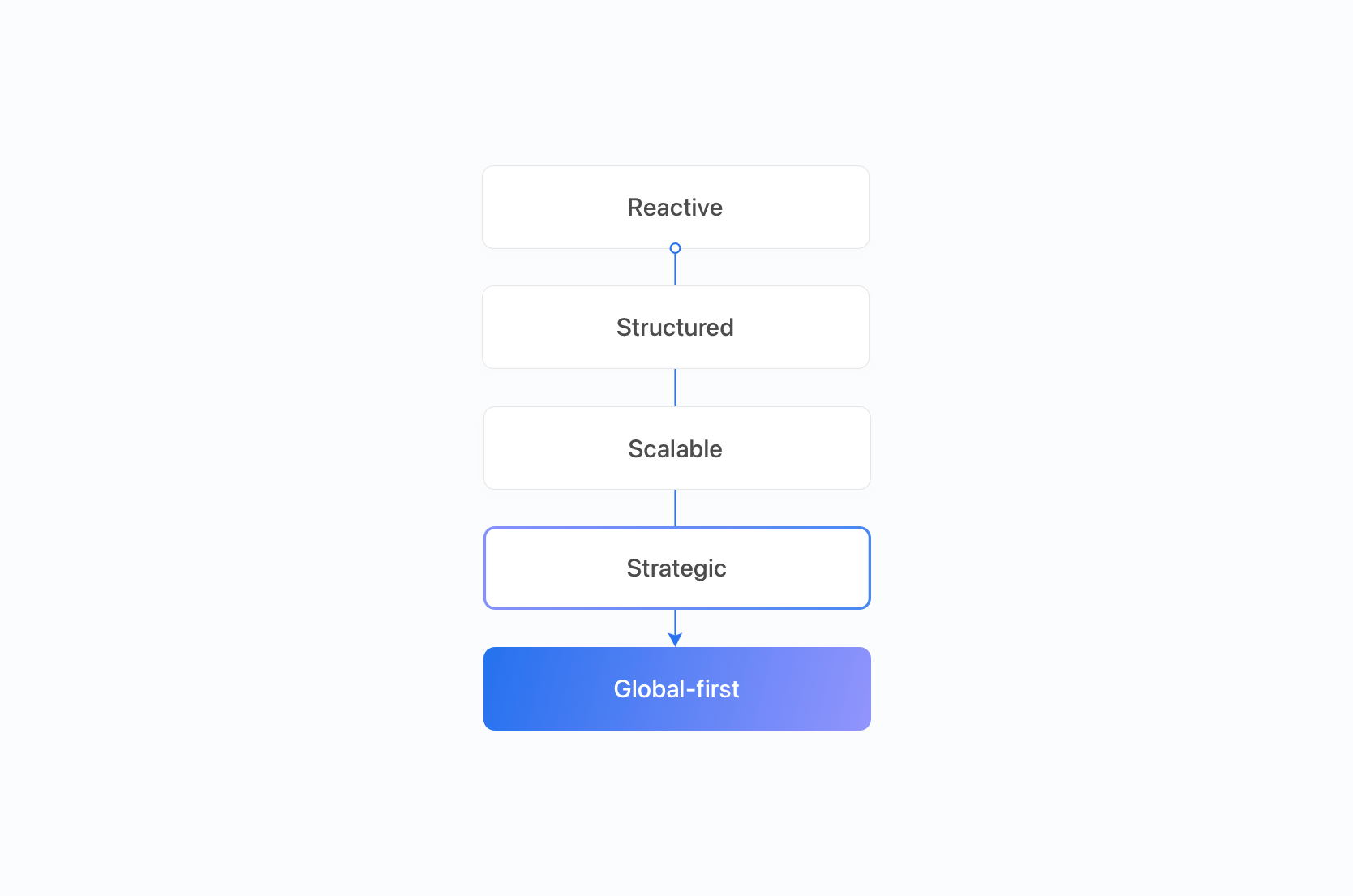
If you prepare correctly, localization becomes scalable, predictable, and growth-driven instead of reactive and chaotic.
Ready to start? See how to pick a translation workflow for small teams.