 VS Code Extension available! Install now
Localization
on autopilot
Stop managing translations manually. Build intelligent workflows that detect new keys, trigger AI translations, and publish updates, all without writing a single line of code.
We power your product localization
From first commit to global launch














The end of manual i18n
Eliminate the “localization tax”
Developers spend hours every week syncing JSON files and coordinating with translators. SimpleLocalize automations turn those hours into seconds by handling the busy work for you.
No more waiting
New keys are translated the moment they're pushed, no tickets, no pings, no delays.
Always in sync
Source text changes automatically propagate to all target languages. No stale content.
Quality built in
Automations pair with QA checks to catch issues before translations reach production.
Works with your pipeline
Trigger automations from CLI, API, or the web editor, fits any CI/CD workflow.
How translation automation works
Define triggers and actions. When a trigger event occurs, a new key, a source text change, or a completed auto-translation, the corresponding action runs automatically.

Detect changes
Automatically identify when new text is added or changed with no manual tracking required.
Auto-translate with AI
Use DeepL, Google Translate, or OpenAI to fill in missing translations instantly.

Sync with your tools
Push and pull translations from GitHub, S3, or APIs to keep everything in sync.

Notify your team
Trigger webhook or Slack alerts when translations need review or actions are completed.

Workflows that scale with your app
Build a custom pipeline that connects your code
to your users instantly.
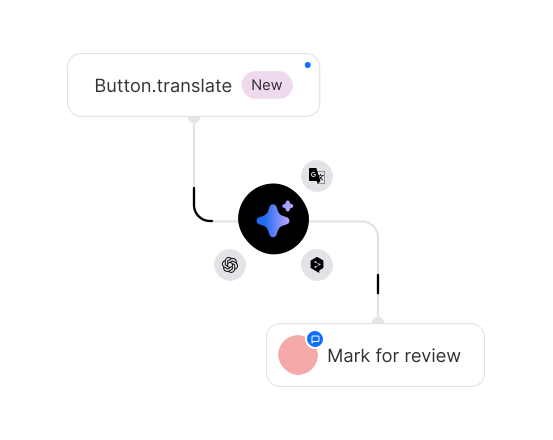
Hands-free AI translation
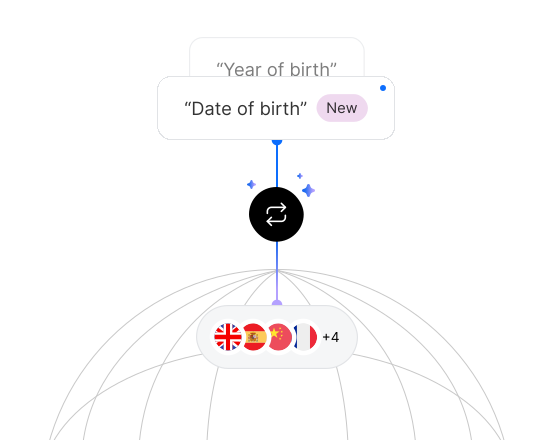
Continuous source sync
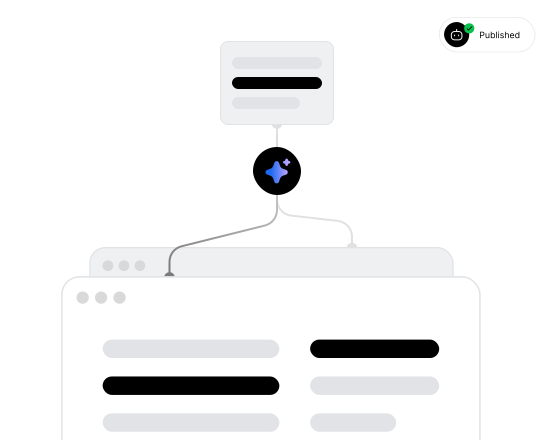
Auto-deployment to CDN
See it in action
Watch how to build a complete automation pipeline, from detecting changes to publishing translations, in under a minute.
Automation meets quality
Automations create content. QA checks keep it safe.
Automations and QA checks are two sides of the same coin. Automations handle the speed: translating, syncing, and publishing. QA checks handle the safety: catching missing placeholders, broken tags, and length overflows before they ship.
Speed
Automations translate and publish the moment content changes. No waiting for manual steps.
Safety
QA checks validate every auto-translated string: missing variables, broken tags, length issues.
Confidence
Review workflows ensure human approval before automated content reaches your users.
Why SimpleLocalize?
Most tools are overkill.
SimpleLocalize is fast, simple, and works out of the box.
Fast and customizable
SimpleLocalize is easy to get started with and focuses on the features that you and your team need the most. You can customize the editor to your needs choosing from a variety of options.
Flat pricing
No hidden costs! SimpleLocalize offers a simple and affordable plans for you and your projects. Within easy integration options and intuitive translation editor, it creates a wonderful selection.
Team members included
Every paid plan comes with a number of users you can add to your project. You don't need to worry about number of users as the price does not increase with every user.
Auto-translation included
Every paid plan comes with auto-translation characters that you receive every month. You can also use bring your own API keys and use them with SimpleLocalize in any plan (even free!).
Tools for Developers
SimpleLocalize gives developers the tools they need to automate and integrate localization into any workflow, such as CLI tool, VS Code extension, IntelliJ plugin, Figma integration, and more.
Personal support
From “how do I get started” to “I need XYZ” requests, when you need that extra helping hand, we’re here for you. We are here to make sure you get the most out of SimpleLocalize.
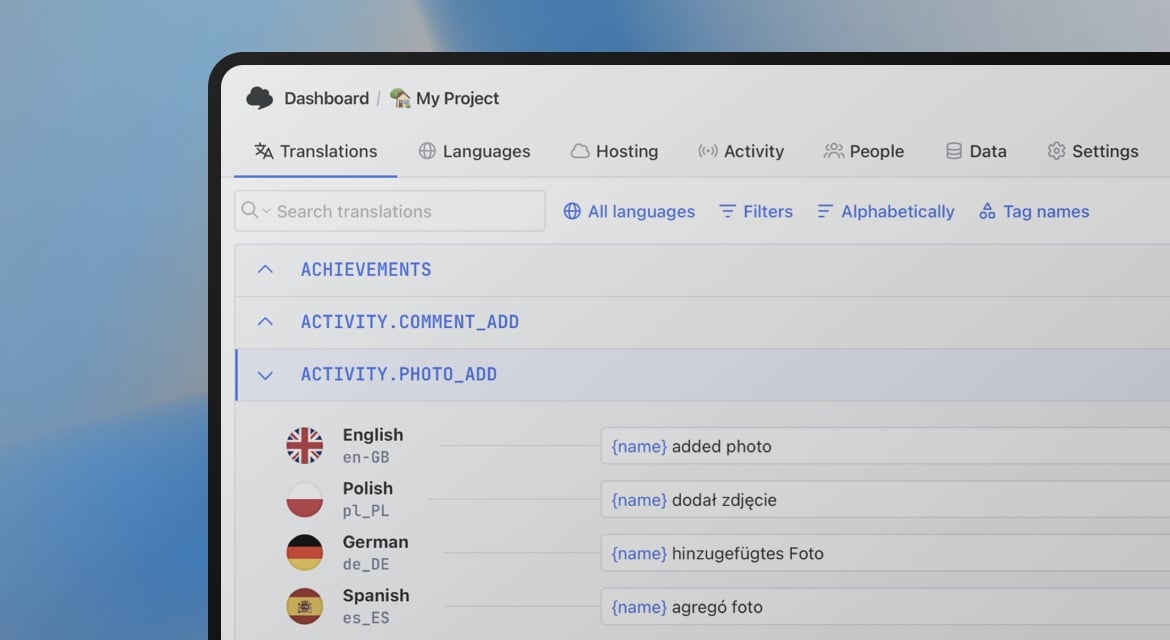
Start your first automation in 60 seconds
- No-code automation builder, no Zapier or custom scripts
- Hands-free AI translation with OpenAI, DeepL, and Google
- Continuous source sync, translations stay evergreen
- Auto-publish to CDN after translation or approval
"The product
and support
are fantastic."
"The support is
blazing fast,
thank you Jakub!"
"Interface that
makes any dev
feel at home!"
"Excellent app,
saves my time
and money"
Translation automation guides
Guides, tutorials, and best practices for automating your localization workflow.
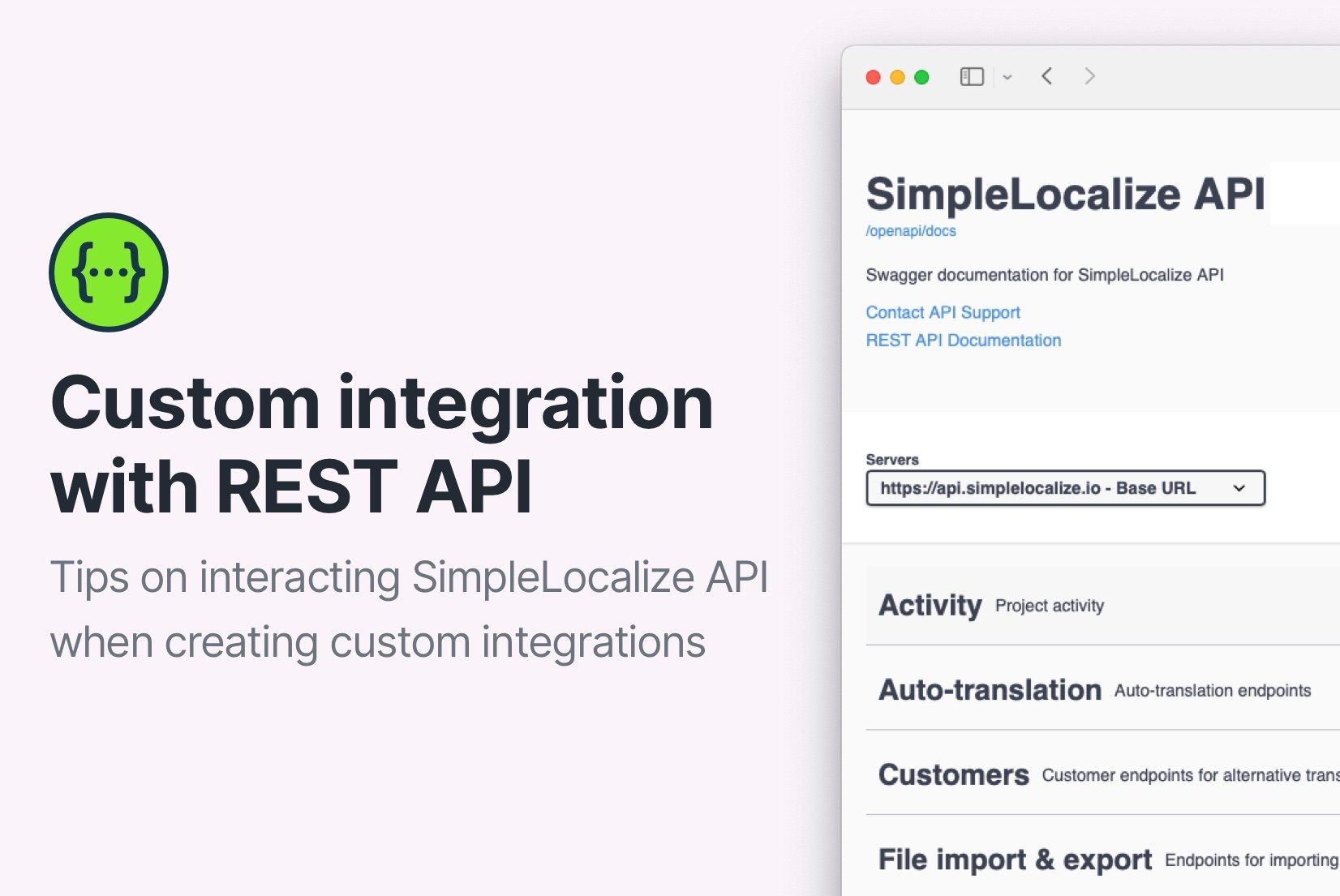
Custom integrations for SimpleLocalize
Create a SimpleLocalize integration for your custom translation tool. Learn the best practices and tips for building a custom integration that works seamlessly with SimpleLocalize.
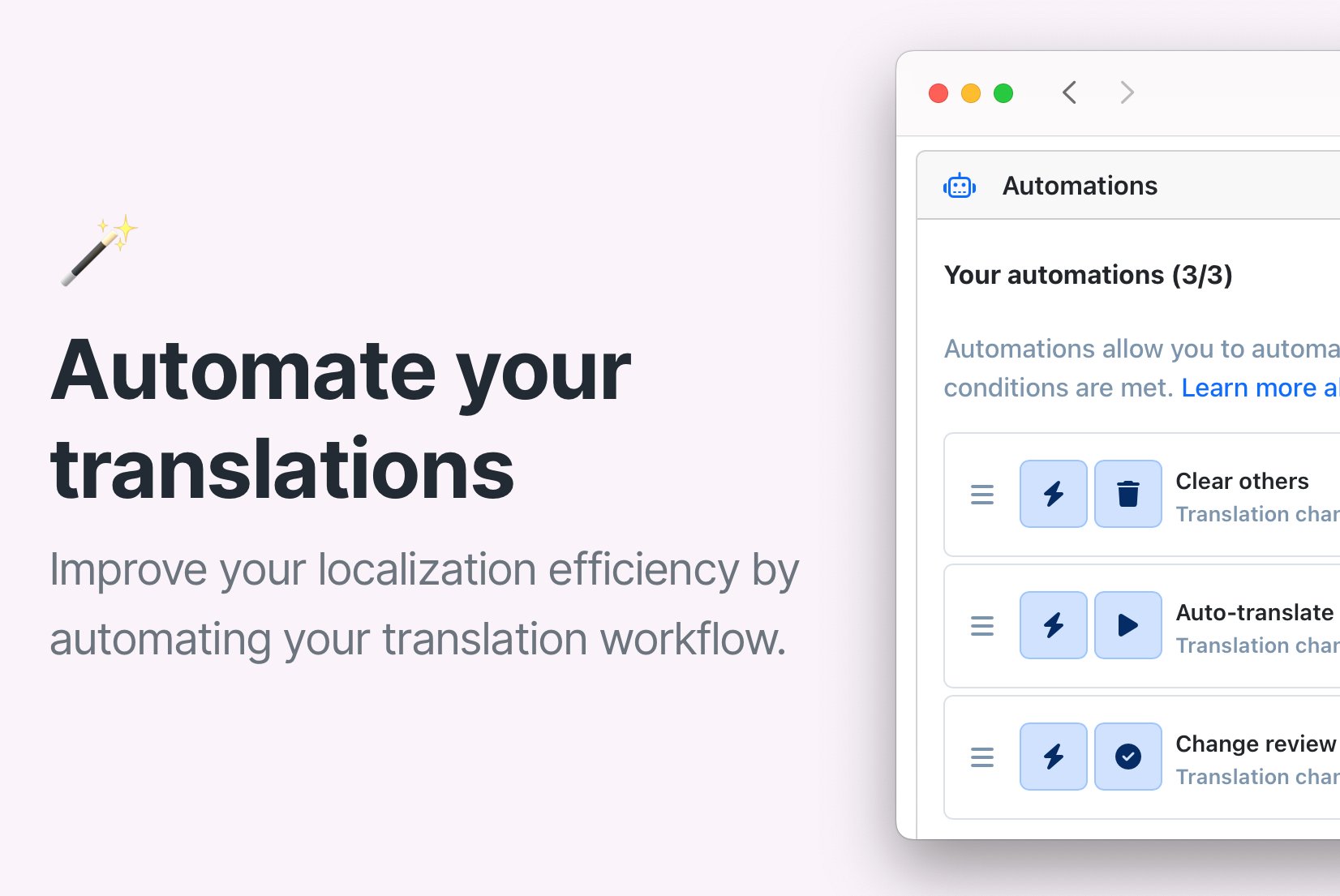
Save time with SimpleLocalize Automations: Auto-translate, review & more
Speed up your translation workflow with automations in SimpleLocalize. Automatically translate, clear, or update review status when translations change. Watch the setup video.
Automate translation updates with review statuses
Automate translation updates with review statuses in SimpleLocalize. Keep translations consistent across languages and versions with less manual effort.
Automate translation updates with review statuses
Automate translation updates with review statuses in SimpleLocalize. Keep translations consistent across languages and versions with less manual effort.
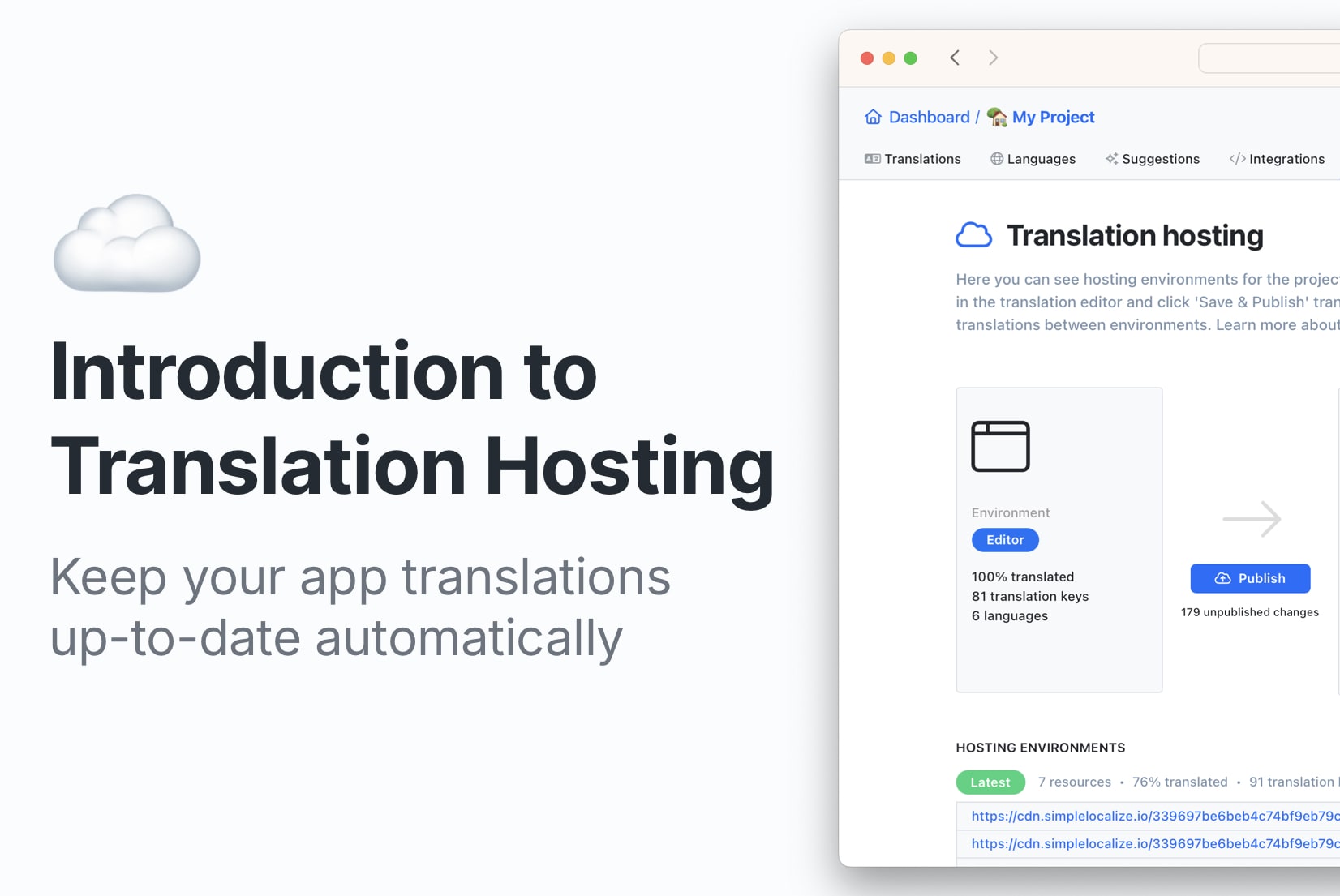
Translation Hosting: How to update translations automatically?
Save time with automatic translation updates. Try SimpleLocalize Translation Hosting to keep your app's translations up to date effortlessly in any environment.
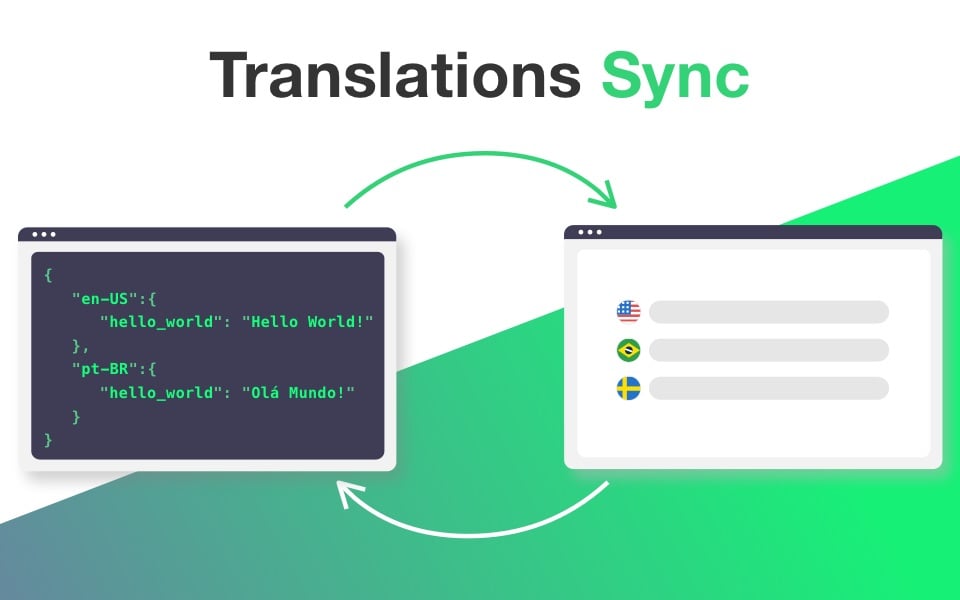
How to keep translations up to date with every release?
Keep software translations in sync with each release. Learn to manage, update, and clean up translation keys for a smooth and scalable localization process.
Why automate your translation workflow?
In a modern continuous localization setup, speed is everything. If a developer pushes a new feature on Friday, you don't want to wait until Monday for a manual translation. Automations allow you to have a "ready-to-ship" app at all times. By combining automations with QA checks, you ensure that even automated translations meet your technical standards before going live.
No-code automation vs. custom scripts
While you can build your own automation using the REST API or CLI, SimpleLocalize's built-in automation engine is faster to set up and easier for non-technical team members to manage. It replaces the need for third-party tools like Zapier or custom GitHub Actions — everything runs natively inside the TMS.
Common automation use cases
Translation automations support almost any workflow:
- Auto-translating new keys when content is added or updated via CLI, API, or the editor
- Re-translating or clearing targets when the source language string changes
- Publishing translations to CDN once auto-translation or review is complete
- Changing review status to flag auto-translated strings for human review
- Triggering webhooks to notify Slack, email, or external systems
Continuous localization for modern apps
SimpleLocalize fits into continuous localization pipelines. Use it with GitHub, GitLab, CLI, or S3 to automatically update and publish translations as part of your deployment process. Automations run on file uploads, translation changes, or auto-translation completion — ensuring every change is translated, reviewed, and deployed without delay. Combined with AI translation providers, it's the fastest way to keep your app multilingual and up to date.
What are translation automations?
Translation automations are no-code rules that trigger specific actions when translation events occur. For example: when a new key is pushed via CLI, auto-translate it with DeepL and mark it for review. Automations replace manual steps like coordinating with translators, running batch translations, and publishing updates.
What triggers are available?
Two trigger types: 'Translation change' (activated when a translation is added or edited — filterable by language and source: API, Web, CLI) and 'Auto-translation finished' (activated when an auto-translation job completes). Both can trigger multiple actions in sequence.
What actions can automations perform?
Actions include: auto-translate strings (with DeepL, Google Translate, or OpenAI), clear translations, change review status, and publish translations to CDN. You can chain multiple actions and filter them by review status.
Can automations trigger other automations?
No — automations never trigger other automations to prevent infinite loops. However, you can create multiple automations for the same trigger, and they execute in order from top to bottom.