Continuous localization: What it is, why it matters, and how to implement it

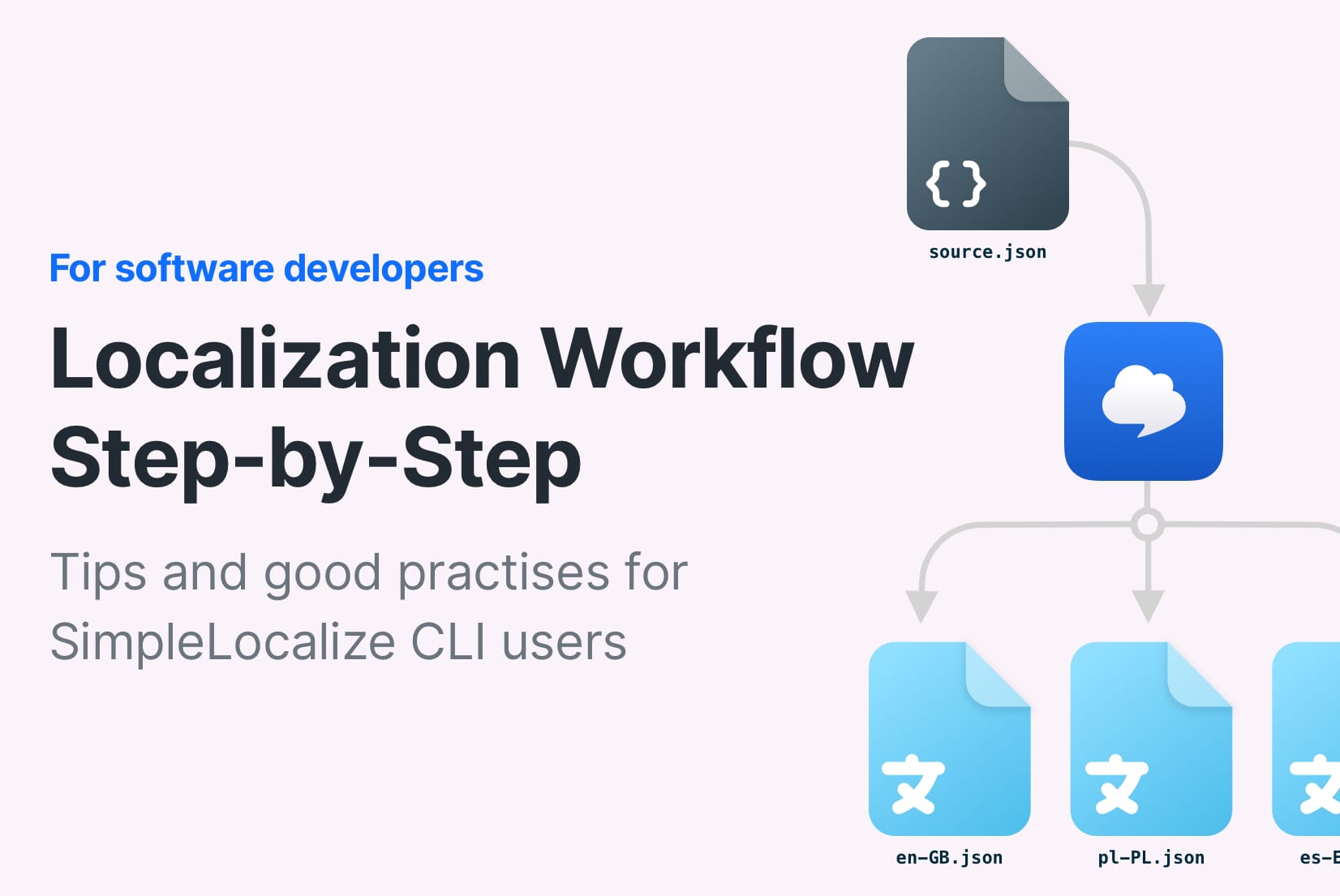
In today's fast-moving software world, traditional localization workflows, done at the end of a release cycle, no longer keep pace with development. Teams export translation files, wait weeks for updates, then scramble to fix missing or out-of-date strings. For organizations shipping weekly or daily, this delay isn't just annoying, it slows releases and increases the risk of last-minute fixes. This is a common challenge for SaaS teams, mobile apps, and web platforms using modern CI/CD pipelines.
Continuous localization changes the game by embedding translation updates directly into your development lifecycle. Rather than batching work at the end of a cycle, it creates an ongoing, automated localization workflow that keeps translations aligned with code changes in real time — one of the most important execution layers in a well-designed i18n architecture. It's also a key upgrade in your localization maturity model.
If you are planning localization at scale, see the Localization Strategy Guide for SaaS teams for the full framework.
In this article you'll learn:
- What continuous localization is
- How it fits into modern DevOps and CI/CD workflows
- Concrete steps to implement it
- Best practices for automation, quality, and scale
- How tools like SimpleLocalize make it practical
What is continuous localization?
Continuous localization is the process of continuously syncing and updating translations as source content changes, right alongside feature development and deployment.
Instead of treating translations as a one-off task, teams adopt localization as part of their regular development workflow. This ensures that users in every supported language get the same experience, at the same time as new features and updates are released.

In practical terms, continuous localization workflows:
- Detect updated source strings instantly
- Sync and push new/changed strings to translation systems
- Trigger translations automatically
- Deliver translated content back into the application without manual steps
This approach ensures localization keeps pace with frequent releases, DevOps pipelines, and automated delivery workflows.
Real-world example
A US-based poker education platform moved from 1 language to 4 by embedding localization directly into their release workflow.
Instead of exporting strings manually, new UI text is automatically captured and synchronized to their localization platform. Translations are reviewed internally and promoted through development → staging → production environments, just like code.
"This makes localization a routine part of our release cycle rather than a separate manual effort." - Product Manager, Poker Education Platform
This is continuous localization in practice: localization evolves alongside product development, not after it.
Continuous vs traditional localization workflows
Traditional localization typically looks like this:
- Developers finish features
- Strings are exported manually
- Translators work on a static snapshot
- Translations are imported back
- Fixes and bugs are addressed later
This batch-oriented process introduces delays, risks missing strings, and slows releases.
Continuous localization replaces that with incremental, automated updates:
| Traditional localization | Continuous localization |
|---|---|
| Manual string export/import | Automatic synchronization |
| Large translation batches | Small, frequent updates |
| Localization after development | Localization during development |
| High risk of missing strings | Changes tracked in real time |
| Slower releases | Faster, predictable releases |
By closing the gap between code changes and translations, continuous localization helps teams move faster without sacrificing quality.
How continuous localization works
At a high level, continuous localization connects:
- Source content and code
- Localization management
- Translation workflows

Here's a typical workflow:
- A developer adds or updates a UI string
- The change is committed and pushed to source control
- A CI/CD system detects the update
- Strings are synchronized to a localization platform (such as SimpleLocalize)
- Translation workflows are triggered automatically
- Completed translations are delivered back into the app
These steps can occur multiple times per day, fully automated and integrated with your DevOps toolchain.
CI/CD (Continuous Integration and Continuous Deployment) automates how code changes are integrated, tested, and delivered. Learn more in GitHub's overview of CI/CD workflows.
Core components of continuous localization
Successful continuous localization workflows rely on a few key elements:
1. A reliable source of truth for translations
Your localization platform must serve as a single system of record for:
- Translation keys and values
- Status per language
- Version history
- Removed strings and conflicts
SimpleLocalize provides this central repository for all your localized assets, keeping languages in sync with your product's current state.
To understand how localization connects to product, UX, and engineering decisions at scale, see our guide to Localization Strategy for SaaS teams.
2. Automation via modern CI/CD
Automation is what makes localization continuous. Common automation points include:
- Detecting string changes on pull requests or merges
- Triggering translation pipelines on update
- Failing builds if translations are missing or invalid
- Publishing translations alongside app deployments
SimpleLocalize integrates with CI/CD pipelines, APIs, and automation tools so localization becomes part of your existing delivery flow.
3. Flexible translation workflows
Continuous localization doesn't mean every string must be human-translated immediately. Teams often use a mix:
- Machine translation for speed
- Human review for quality
- AI-assisted workflows for efficiency
SimpleLocalize supports all of these and allows teams to configure workflows that match their quality and speed requirements.
How to implement continuous localization
Here are practical steps most teams follow to make continuous localization real:
Step 1: Externalize all user-facing text
Continuous localization only works when all translatable content is separated from your source code.
Best practices:
- Use stable translation keys instead of inline strings
- Avoid embedding variables directly in text
- Keep keys descriptive and consistent
Example:
{
  "checkout.success": "Your order {{orderNumber}} has been placed successfully."
}
Learn more in our guide on best practices for creating translation keys.
Step 2: Connect your app to a localization platform
Whether your app fetches translations at runtime or embeds them at build time, you need a connection between code and localization.
SimpleLocalize offers:
- A robust API for fetching and managing translations
- Fast CDN delivery
- Integrations with GitHub and other platforms
- Webhooks for triggering workflows
This enables translations to update independently of full deployments.
Step 3: Automate string synchronization
Automating synchronization ensures your localization system always reflects the latest code.
Popular approaches:
- Sync on every pull request merge
- Sync nightly or on release tags
- Sync on every deployment
Using the Localization API, Localization CLI, or integrations, SimpleLocalize lets you automate this with minimal setup.
Step 4: Automate translation where it makes sense
For many teams, manual translation for every string is impractical.
A typical setup:
- New strings are translated automatically (machine or AI)
- Reviews occur asynchronously
- Critical languages or features get priority human review
Automation decisions are strategic, not just technical. Some teams rely heavily on machine translation in early stages, while others introduce human review as quality requirements increase. If you're evaluating when automation alone is enough and when structured QA becomes necessary, read our guide on AI-powered localization workflows.
Step 5: Monitor and enforce quality
Continuous doesn't mean uncontrolled. Good quality checks include:
- Placeholder and variable validation
- Missing translation checks in CI
- Alerts for untranslated content
- Review states for key languages
With SimpleLocalize's automated QA checks, teams maintain quality even with rapid updates.
Best practices for continuous localization
-
Make changes small and frequent
Frequent, incremental updates reduce translation backlog, simplify reviews, and lower the risk of errors.
-
Use clear, semantic translation keys
Keys should represent meaning (e.g.,
profile.update_success), not UI structure. -
Treat localization as a core product concern
Involve product managers, developers, and localization specialists early and often, not just at the end of a release cycle.
How SimpleLocalize supports continuous localization
SimpleLocalize is designed from the ground up for continuous localization workflows, with features like:
- Real-time string sync
- API-first architecture
- CI/CD-friendly integrations
- AI-powered translation workflows
- Review and approval processes
- Fast CDN delivery
Teams can start with minimal automation and grow into more advanced workflows over time.
For full setup instructions and integration guides, see our documentation.
When continuous localization makes the biggest difference
Continuous localization delivers the most value for teams that:
- Ship updates frequently (weekly or faster)
- Support multiple languages
- Use CI/CD and automated testing
- Have distributed development and localization teams
- Want to eliminate release bottlenecks caused by translation
For these teams, localization becomes a seamless part of development, not a separate, error-prone step.
Where continuous localization fits in your localization strategy
Continuous localization is typically adopted when teams move from occasional translation projects to structured, scalable localization.
In early-stage products, localization may be handled manually, with exports and batch translations tied to major releases. As release cycles accelerate and more languages are added, this approach becomes a bottleneck.
Continuous localization usually emerges when:
- Release cycles are weekly or faster
- Localization delays block deployments
- Multiple teams contribute UI text
- Manual export/import workflows become unsustainable
In that sense, continuous localization is not just a technical setup. It's a scaling decision within your broader localization strategy. But before automating everything, make sure your TMS pricing model doesn't penalize API usage or downloads.
If you're defining how localization should evolve as your product grows, see our guide to Localization Strategy for Global SaaS Growth.
FAQ
What is the difference between continuous localization and continuous translation?
Continuous translation focuses only on translating new or changed strings as they appear, often using automation or machine translation.
Continuous localization is broader. It includes translation, but also covers:
- String management
- Automation via CI/CD
- Versioning and synchronization
- Quality checks and reviews
- Delivery back into the product
In other words, translation is one part of a complete continuous localization workflow.
Is continuous localization only for large teams?
No. While large organizations benefit greatly, small and mid-sized teams also gain value—especially if they:
- Ship updates frequently
- Support more than one language
- Use CI/CD pipelines
- Want to avoid manual localization work
If you're a small team evaluating where to start, see how to pick a translation workflow for small teams — it covers when continuous localization makes sense and when a simpler pattern is enough.
Continuous localization scales with your process. Teams can start with basic automation and add more advanced workflows over time.
Do you need CI/CD to use continuous localization?
CI/CD is not strictly required, but it makes continuous localization significantly more effective.
Without CI/CD, teams can still automate string sync and translations using APIs or integrations. With CI/CD, localization becomes fully embedded into the development pipeline, ensuring translations are always aligned with code changes and releases.
Does continuous localization mean everything is machine-translated?
No. Continuous localization does not require fully automatic translation.
Most teams use a hybrid approach:
- Machine or AI translation for speed
- Human review for quality where it matters
- Different workflows for different languages or features
The goal is flexibility: automating where possible without compromising quality.
How do teams handle quality in continuous localization?
Quality is maintained through:
- Placeholder and variable validation
- Missing translation checks in CI
- Review and approval workflows
- Automated QA rules
When these checks are built into the workflow, teams can move fast without introducing translation errors into production.
When should a team adopt continuous localization?
Continuous localization is a good fit if your team:
- Releases frequently (weekly or faster)
- Supports multiple languages
- Uses modern DevOps or CI/CD practices
- Wants to reduce release delays caused by localization
For teams in these situations, continuous localization often becomes essential rather than optional.
Conclusion
For SaaS businesses, the impact goes beyond workflow efficiency. Continuous localization reduces time-to-market in new regions, lowers operational overhead, and minimizes last-minute release risks. It transforms localization from a reactive task into a predictable, scalable system aligned with product growth.
Continuous localization isn't just a tool set, it's a modern way of working. By combining automation, clear processes, and the right integrations, teams keep translations in sync with development without slowing down.
With the right workflow and tooling (like SimpleLocalize), you get:
- Faster releases
- Fewer localization surprises
- Higher quality translations
- Better global user experiences
For many teams, the shift to continuous localization happens when growth exposes operational limits. Adding new languages increases complexity, unless localization evolves with your release process.
Teams that embed localization into CI/CD don't just translate faster. They remove friction from global expansion and build products that feel native in every supported language.