Keyboard shortcuts for Translation Editor

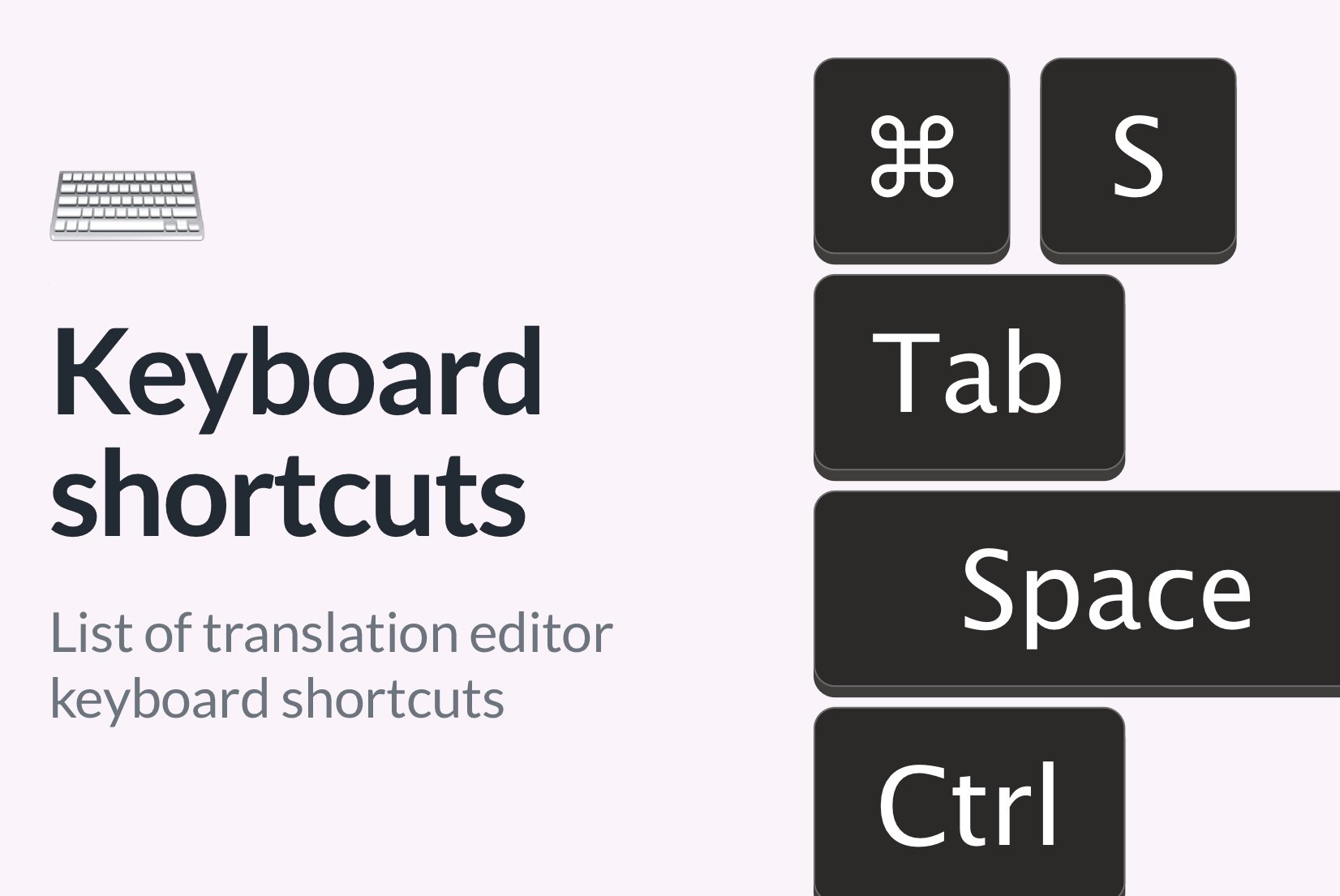
If you're a novice or experienced SimpleLocalize user, mastering keyboard shortcuts for frequently used actions can significantly enhance your productivity. To simplify the translation process, we have compiled a list of the most useful SimpleLocalize keyboard shortcuts that you'll use regularly. These shortcuts include frequently used actions and features that are likely to be part of your workflow.
Note: macOS users should use the ⌘ button instead of Ctrl.
Save changes
You can save your changes by clicking the Save button in the Translation Editor. You can also use the keyboard shortcut Ctrl + s to save your changes.
Create translation key
You can open the Create translation keys dialog by clicking the Ctrl + . button. This dialog allows you to create a new translation key and add translations for it.
Open Assistant
You can open the Assistant by clicking the Ctrl + k button. The Assistant provides helpful suggestions and tips to improve your translations.
Switch project
You can use the Ctrl + p shortcut to quickly switch between projects.
Go to next/previous translation
Moving from one translation to another is standard during the translation process. To make it faster, you can use the Ctrl + ↓ and Ctrl + ↑ buttons to go to the next or previous string.
Mark as reviewed and go to next translation
You can use the Ctrl + Enter shortcut to mark the current translation as reviewed and automatically move to the next one.
Move around the table
Now you can move around the table without touching the mouse. Here is a table with shortcuts:
| Shortcut | Action |
|---|---|
| Ctrl + ↓ | Go to the next string |
| Ctrl + ↑ | Go to the previous string |
| Ctrl + Enter | Mark as reviewed and go to next translation |
| Ctrl + ← | Go to string start |
| Ctrl + → | Go to string end |
Open row with translations
Do you want to quickly check translations or description in List View? Use the Enter button to open the selected row with translations and arrow keys to move on the list. Click Tab to go to the translation input and start editing the translation. After editing, you can use Shift + Tab to go back to the list and use arrow keys to select the next row.
Delete translation key
Do you need to delete a translation key? You can click on the row and use Delete or Backspace buttons to delete the selected translation key. After deleting the translation key, the translation editor will automatically select the next translation key.
Select multiple translation keys with mouse
Select multiple translation keys by holding down the Ctrl button and clicking on the translation keys.
Select multiple translation keys with keyboard
Don't want to use the mouse? You can also select multiple translation keys with the keyboard. Use the Space button to select translation key and move to the next one with ↓ or previous one with ↑.
Focus on search input
You can use the Ctrl + f button to focus on the search input. After focusing on the search input, you can start typing to search for translation keys and translations.
Search & replace
You can use the Ctrl + Shift + f shortcut to open the Search & replace panel, allowing you to find and replace translations across your project.
Change review status for all translations
You can change the review status for all translations within the selected language by holding the Shift button and clicking on the review status icon.