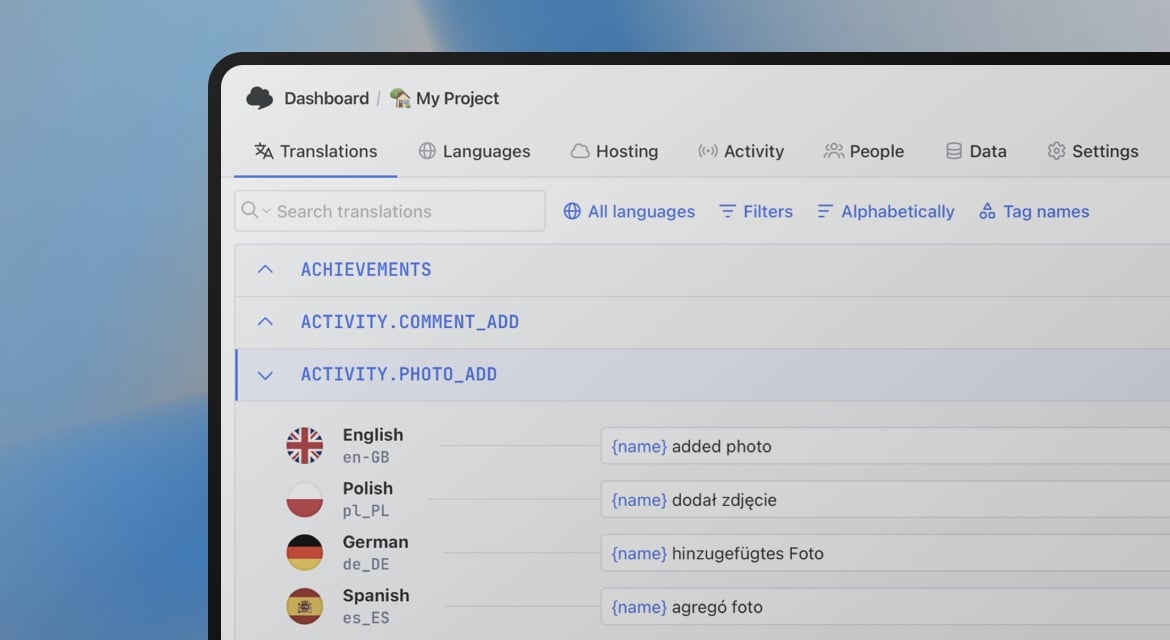
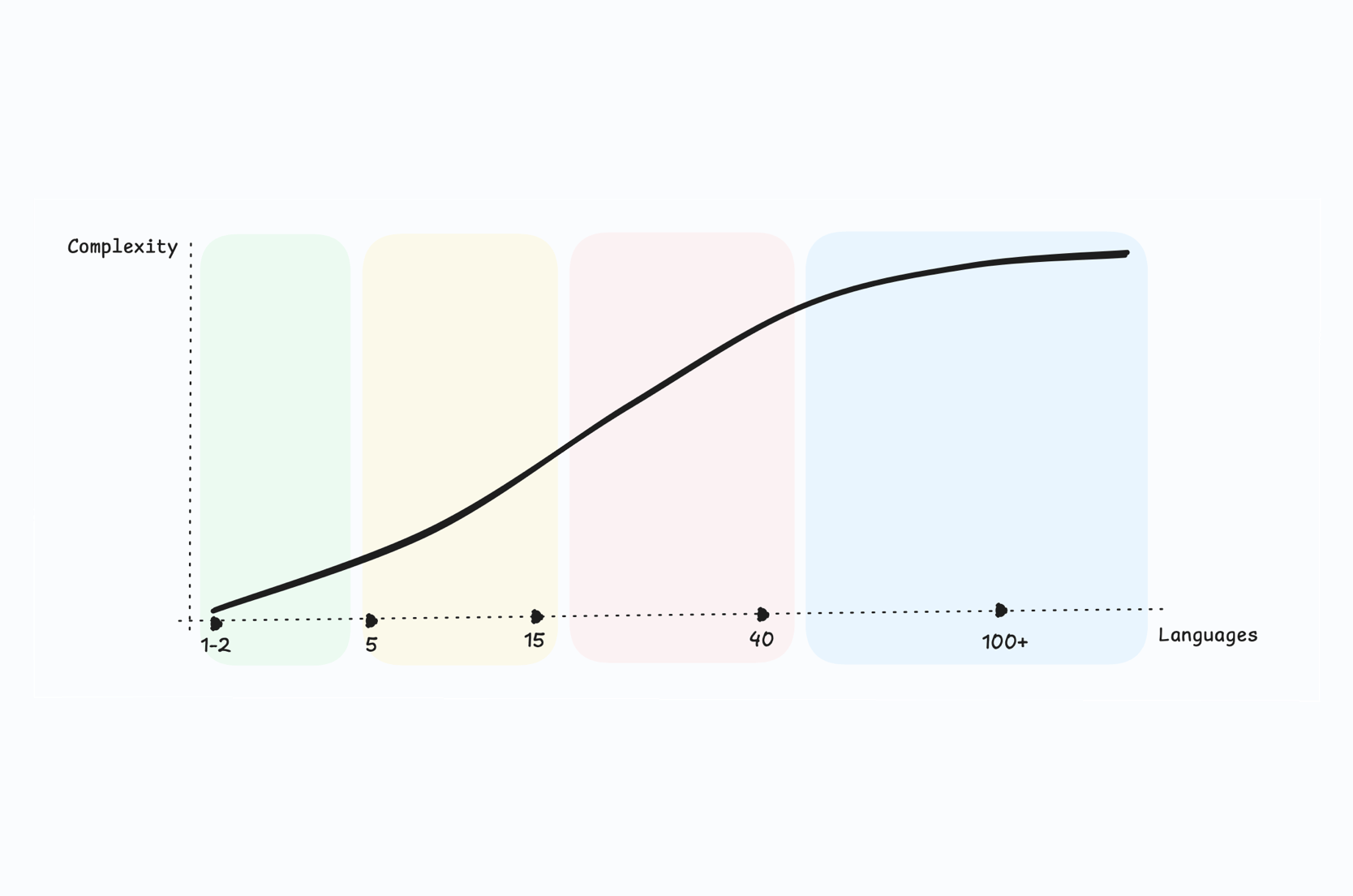
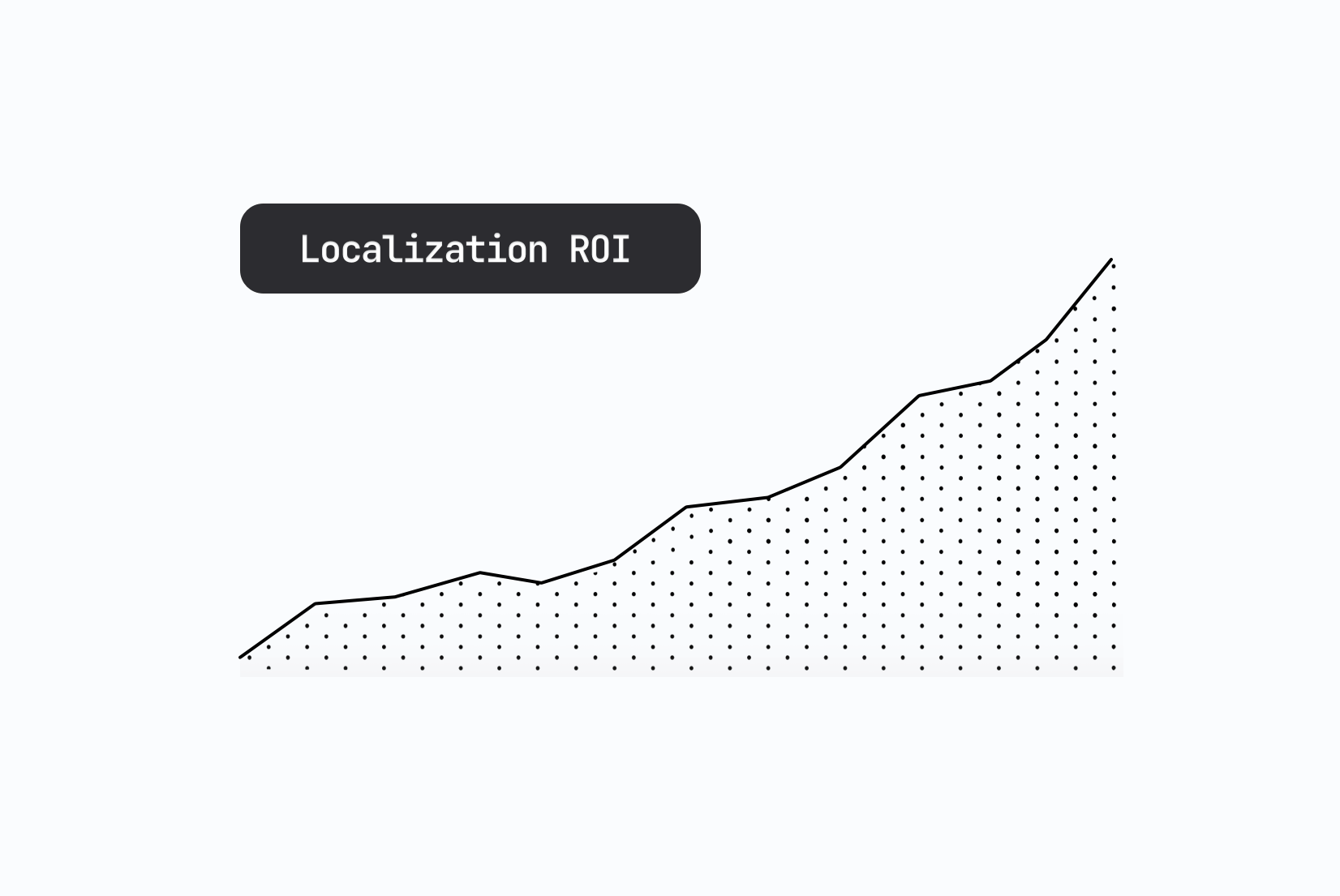
10 strategic benefits of localizing your app (beyond just more users)


Most teams think about localization in very narrow terms: translate the interface, unlock new markets, acquire more users.
That's the surface-level view.
In reality, the benefits of localization go far beyond market expansion. For modern SaaS companies, localization is a structural product decision. It shapes how your codebase evolves, how your teams collaborate, how fast you can enter new regions, and ultimately how resilient your revenue becomes.
When implemented strategically, localization influences:
- Software architecture
- Development velocity
- UX quality and consistency
- Conversion rates
- International SEO performance
- Company valuation
If you're serious about building a scalable product, localization isn't a feature. It's infrastructure.
If you're just starting, first read our Ultimate Guide to Localization Strategy to understand the full framework.
1. Cleaner architecture and better software design
One of the least discussed benefits of localization is how it improves code quality.
When UI text is hardcoded directly in components, content becomes tightly coupled with logic. It works early on, but over time it creates clutter, duplication, and fragile refactoring.
<button>Save changes</button>
Once you introduce localization properly, you shift to semantic identifiers:
<button><FormattedMessage id="settings.save" /></button>
This small structural change enforces:
- Separation of concerns
- Centralized content management
- Reusable terminology
- Safer refactoring
Localization often becomes an accidental architecture upgrade. Teams are forced to think in systems instead of strings — and the codebase benefits from that discipline.
2. Product consistency that scales with growth
In small teams, consistency lives in people's heads.
As the product grows, that breaks.
- "Log in" becomes "Login"
- "Sign up" becomes "Register"
- "Cancel" becomes "Close"
Individually, these are minor issues. Collectively, they erode perceived quality.
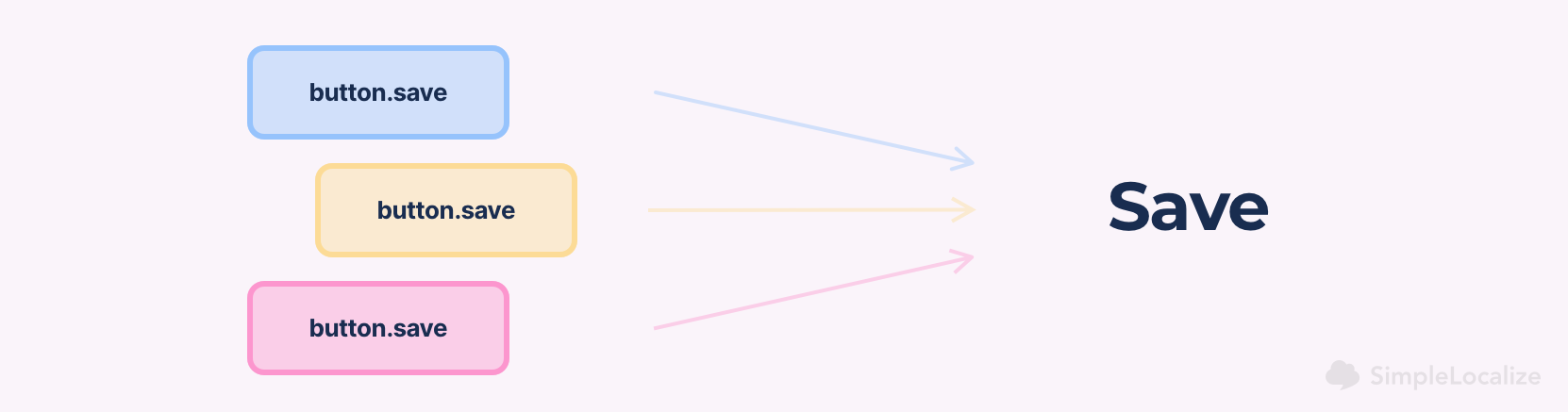
When translations are centralized, terminology becomes controlled. Reusable keys enforce consistency across features. You stop rewriting the same button five times in slightly different ways.
One of the subtle but powerful benefits of localization is that it protects your product's voice as your organization scales.
3. Faster market expansion with lower friction
Without structured localization, entering a new market is a development project. It requires planning sprints, extracting strings manually, fixing layout issues, testing edge cases, and deploying region-specific patches.
With a proper localization pipeline, expansion becomes operational:
- You add the language.
- You translate the strings.
- You publish.
That shift changes the economics of growth.
For example, companies featured in our localization case studies didn't treat translation as an afterthought. They embedded it into their workflows early, which allowed them to expand without architectural rewrites.
In the case of Automa, an industrial e-commerce platform, localization enabled expansion into multiple European markets without multiplying engineering complexity. Instead of building separate regional versions, they scaled from a single structured localization system.
When expansion becomes operational instead of technical, new markets are evaluated based on opportunity, not engineering capacity.
That is one of the most underrated benefits of localization.
If you want to understand where your process stands, review our localization maturity model.
4. Lower long-term development costs
Hardcoded text is invisible technical debt.
Every copy change requires:
- A developer
- A pull request
- A deployment
Now multiply that by onboarding experiments, pricing tests, seasonal promotions, and compliance updates across multiple regions.
With structured localization, copy changes no longer require code changes. Marketing and product teams can iterate independently. Developers focus on business logic instead of wording tweaks.
Over time, this separation reduces engineering workload and shortens iteration cycles, one of the most tangible financial benefits of localization.
5. Higher conversion through cognitive comfort
Users trust products they fully understand.
Reading software in your native language reduces cognitive friction. Instructions feel clearer. Error messages feel less intimidating. Pricing explanations feel more transparent.
In many non-English markets, localized interfaces significantly outperform English-only products in onboarding completion and checkout conversion.
Localization is often framed as expansion. In reality, it is conversion optimization.
It removes invisible friction from the user journey, and friction always costs revenue.
6. Stronger accessibility and UI flexibility
Supporting multiple languages exposes assumptions hidden inside your design:
- Text expands and breaks layouts
- Right-to-left languages shift alignment logic
- Date, currency, and number formatting vary
- Legal requirements differ across regions
Localization forces teams to design flexible interfaces instead of fixed ones.
That flexibility improves accessibility for all users, not only international ones.
If you want to explore this intersection further, see our article on localization and accessibility.
7. Centralized QA and reduced release risk
When content lives inside source code, reviewing it requires navigating the entire application manually. Missing translations are discovered late. Inconsistent phrasing slips into production.
With centralized localization:
- All strings are reviewable in one place
- Missing translations are detectable instantly
- Terminology checks can be automated
QA becomes proactive instead of reactive.
For teams shipping weekly or daily, this significantly reduces release risk, especially across multiple languages.
8. Continuous localization for continuous delivery
Modern SaaS products ship continuously. Without automation, translations lag behind feature releases, creating inconsistent user experiences across markets.
Continuous localization integrates translation into your CI/CD pipeline:
- New strings are detected automatically
- Translators are notified immediately
- Updates flow back into builds without manual coordination
This removes localization as a bottleneck.
For global SaaS companies, this operational shift is one of the most strategic benefits of localization. Learn how to implement it in our continuous localization guide.
9. International SEO and lower customer acquisition costs
Localization doesn't stop at the UI.
Once your infrastructure supports multiple languages, you can extend it to:
- Marketing pages
- Documentation
- Help centers
- Blog content
This enables multilingual SEO, often with lower competition and lower acquisition costs than saturated English markets.
Companies like SageMath, featured in our case studies, benefited from making their software and documentation accessible globally. For open-source and education-focused tools especially, discoverability in local languages dramatically increases adoption.
Localization infrastructure makes it possible to compete in regional search results with properly translated, structured content, rather than relying solely on English.
For SaaS businesses, that means:
- Lower paid acquisition costs
- Higher organic visibility
- Revenue diversification across regions
If global growth is part of your roadmap, localization and SEO should be planned together, not separately.
10. Signals of operational maturity
Localization sends a signal, internally and externally.
Internally, it shows that your product architecture supports scale.
Externally, it signals readiness for global expansion.
Investors and acquirers evaluate operational maturity. A structured localization strategy demonstrates:
- Scalable infrastructure
- Revenue diversification potential
- Process discipline
Even if you're not expanding aggressively today, localization preserves optionality. It ensures that entering new markets later will not require expensive architectural rewrites.
Among the long-term benefits of localization, this strategic flexibility is often underestimated.
The hidden cost of not localizing
Choosing not to localize is also a decision, and it carries consequences.
Without localization:
- International expansion becomes slower and more expensive
- Engineering time is consumed by copy changes
- UX consistency deteriorates
- Conversion rates remain artificially capped in non-English markets
These costs are rarely visible in a single sprint. They accumulate quietly over time.
Localization is not just about enabling growth. It's about removing structural limitations that prevent it.
When is automatic translation enough?
Not every product needs human-reviewed translations from day one.
For internal tools, early-stage MVPs, or low-risk documentation, automatic translation may be sufficient.
But for revenue-critical surfaces like onboarding, pricing, or checkout, unreviewed translations can damage trust and credibility.
Localization maturity is not about perfection. It's about aligning translation quality with business impact.
The more revenue a surface generates, the more attention its language deserves.
FAQ
Localization is a strategic infrastructure decision
Localization is not:
- A marketing add-on
- A one-time translation task
- A "nice-to-have" feature
It is infrastructure.
When embedded early into product architecture and workflows, localization becomes a multiplier: it improves software quality, increases conversion, reduces friction, and unlocks sustainable international growth.
If you're serious about building scalable SaaS, start by understanding where you stand today with our complete localization strategy framework, and treat localization as the strategic lever it actually is.