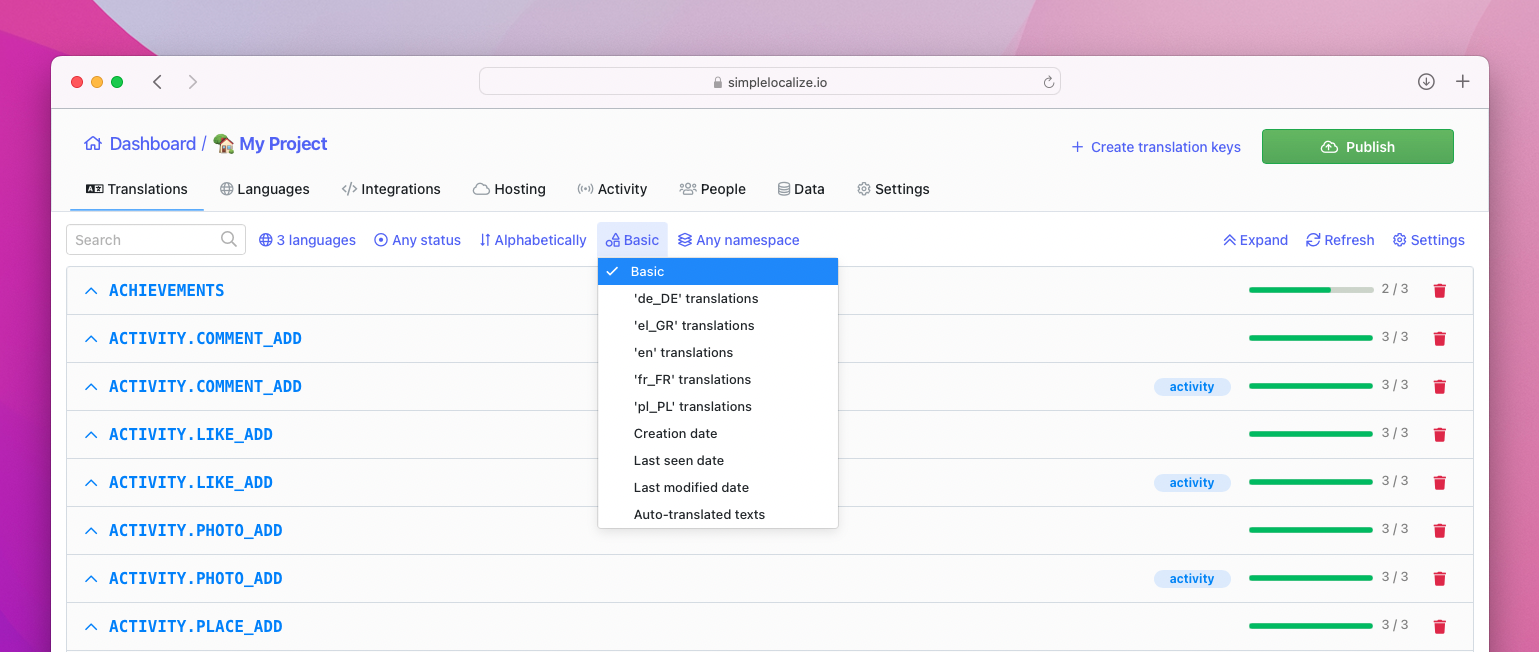
The filters described below will help you work on translations in the translation editor. Thanks to filters, you can adjust the translation list and display only those translations, which you need to see.
Search
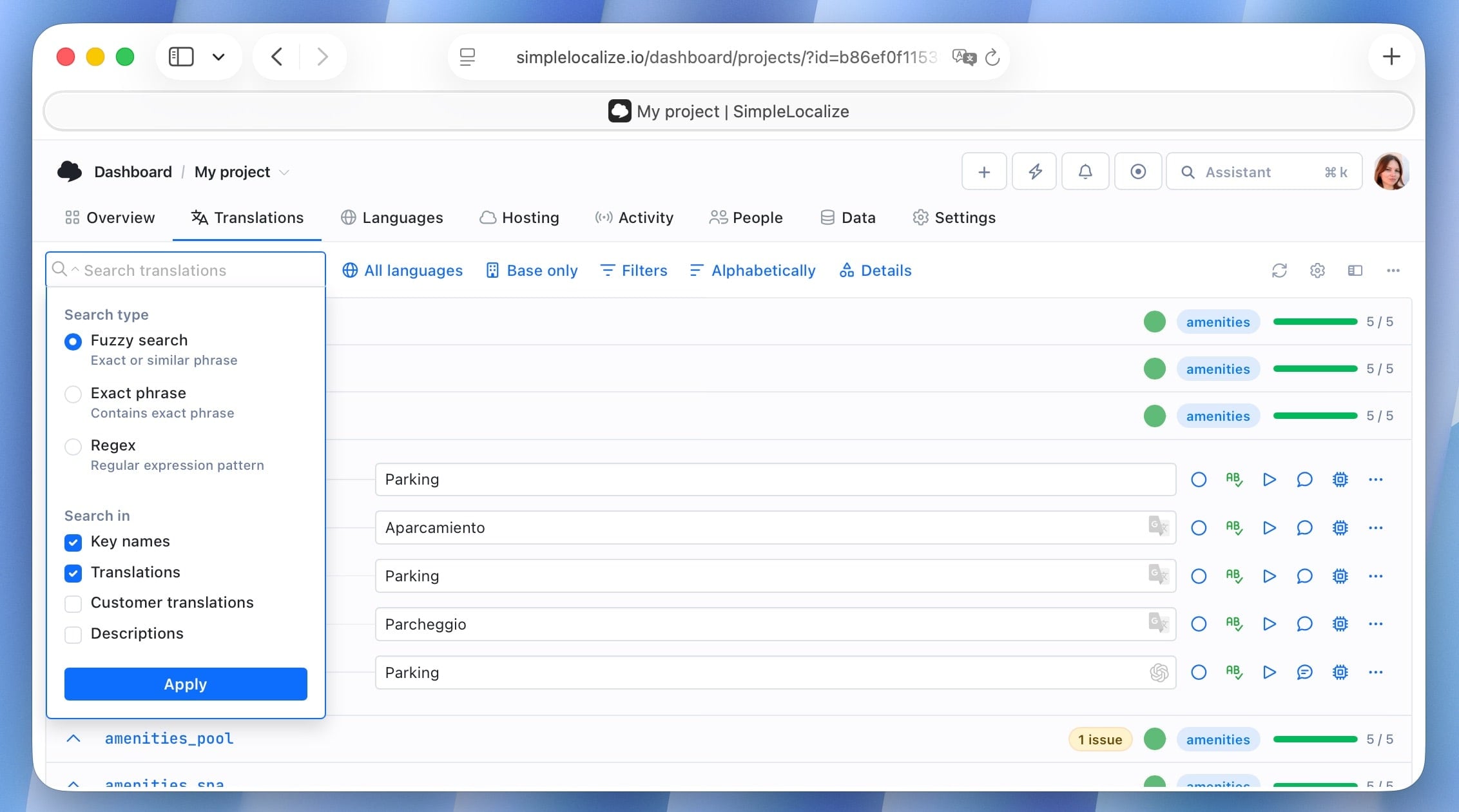
The default search input is a fuzzy search in translation keys and translations. It will find translation keys and translations starting with or containing a specific text.
By clicking on the Search icon you can adjust the search type (change from fuzzy search to exact match or regex) and select the search scope (search in translation keys, translations, customer translations or key descriptions).
Use the Ctrl + F keyboard shortcut to focus on the search input.
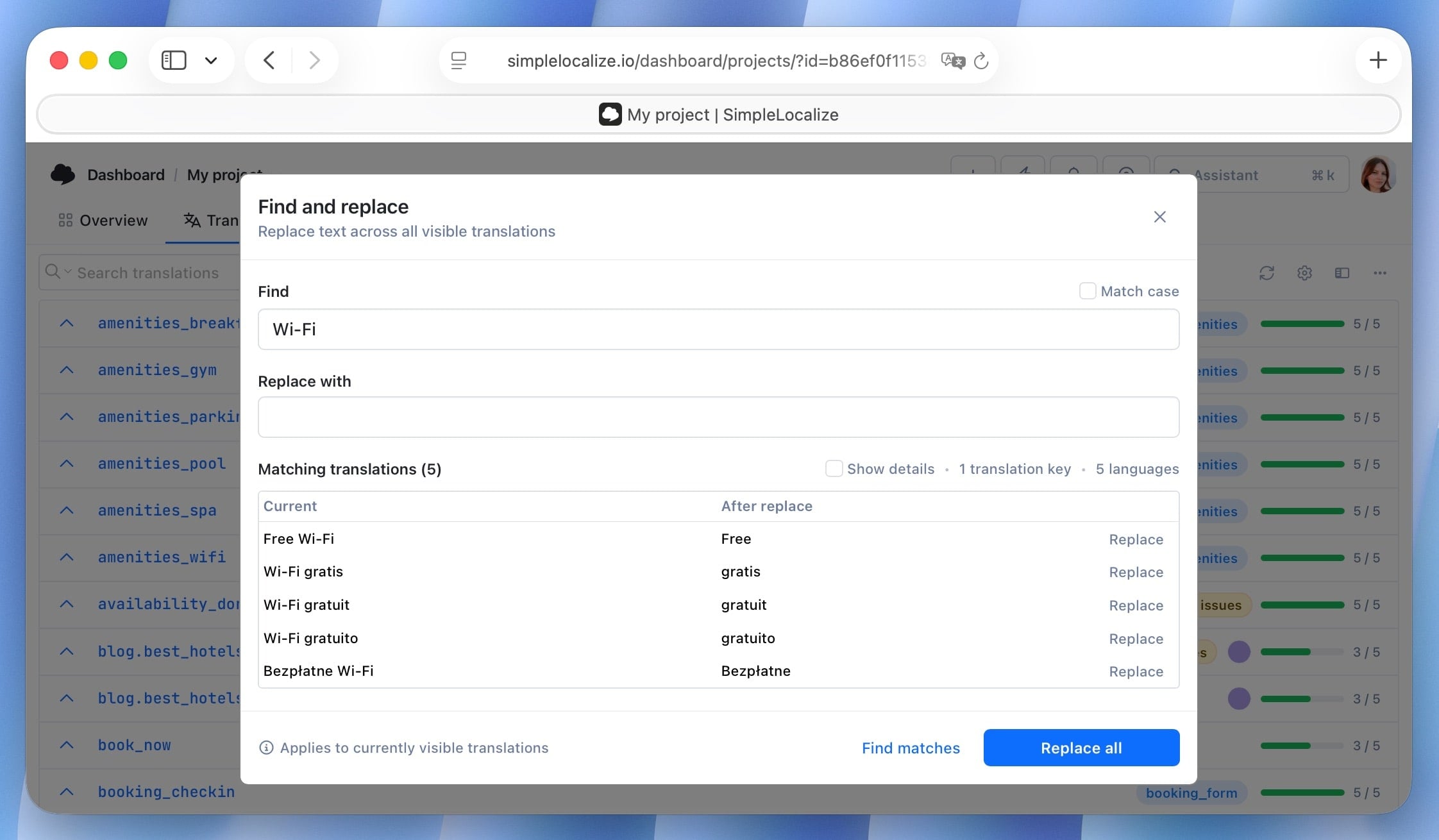
Find and replace
Open the find and replace modal by clicking on the options button in the search input (three dots).
Enter text you want to find and use Find matches button to find all matches in the translation keys and translations. You can replace selected matches or use the Replace all button to replace all matches from the search results.
Use the Ctrl + Shift + F keyboard shortcut to open the find and replace modal.
Languages
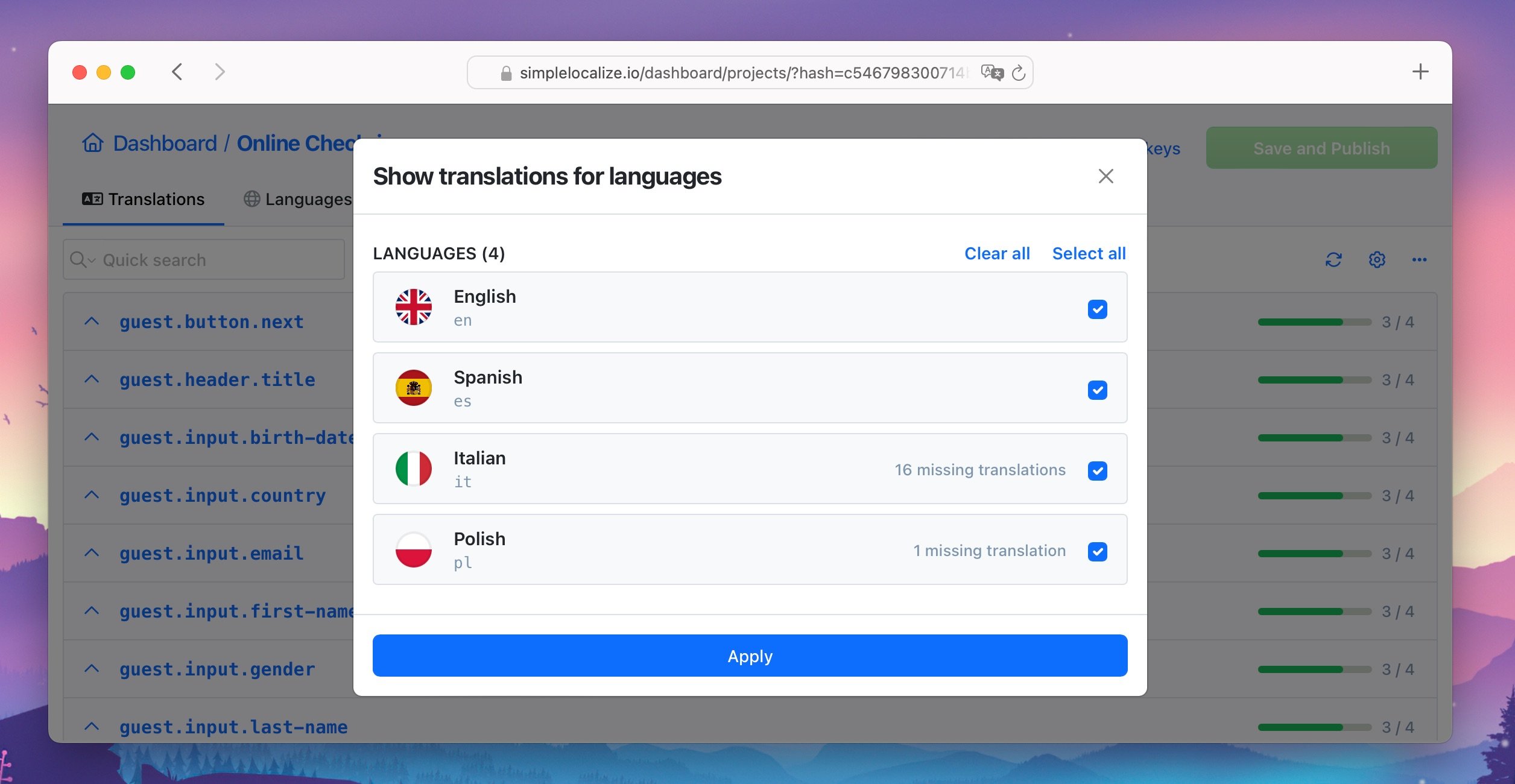
Use Languages filter to select which languages you want to display in the editor. Click on Languages to open the list of all languages used in your project. Select languages you would like to display and click Apply button to go back to the editor.
Filters
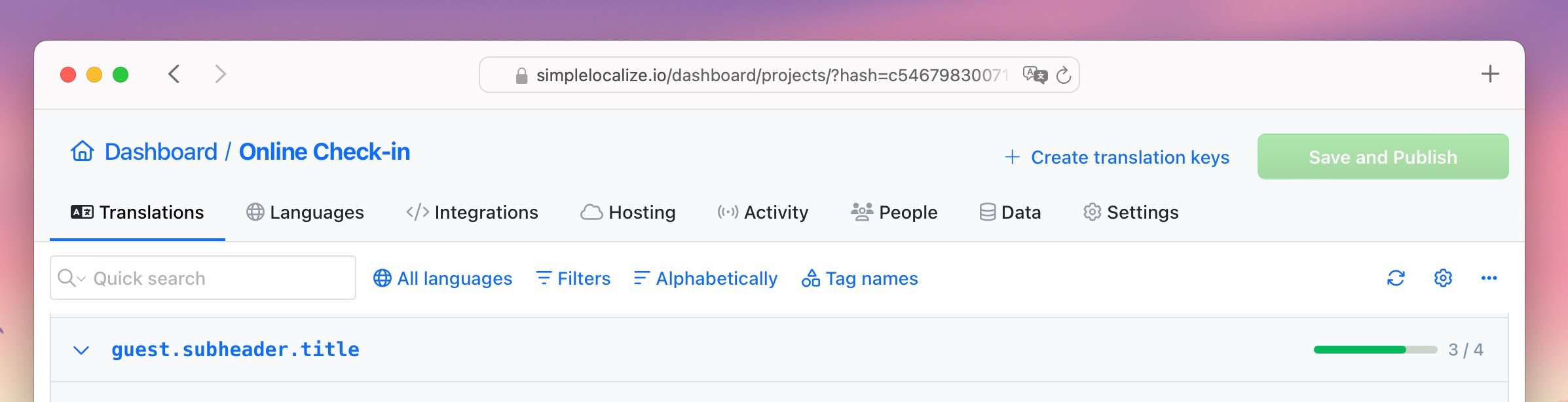
Use Filters to apply additional filters to the list of translations. The quick filter allows you to filter translations by the most common filters, such as missing translations, deprecated translations, auto-translated, by namespace, tag, customer, and more.
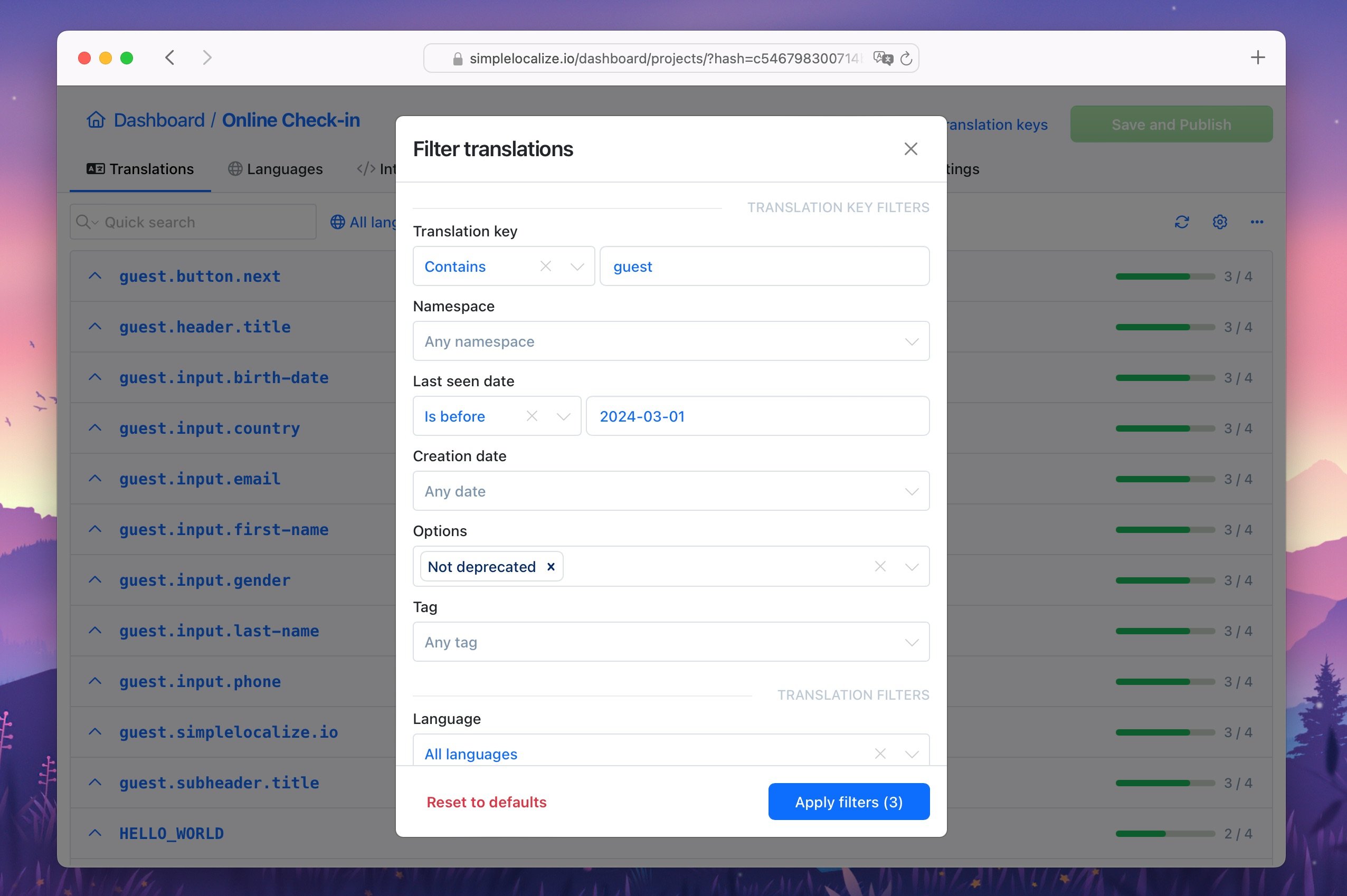
For more advanced filtering, click on All filters to open the filter modal (or click on the Filters button with Shift key pressed). There, you can apply multiple filters for translation keys and translations.
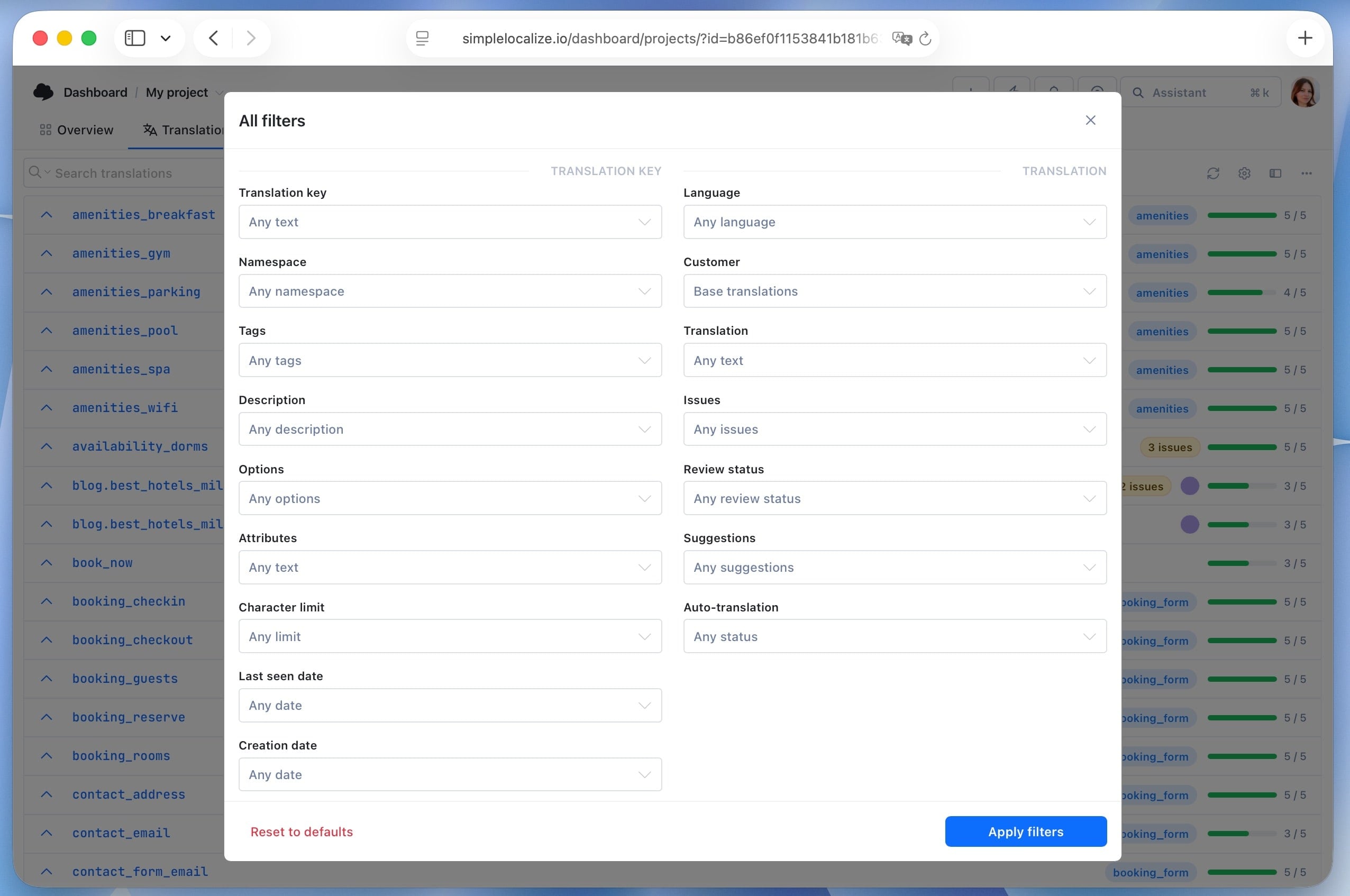
For example, you can use filters to display translation keys:
- with missing translations in a specific language
- with translations that have been auto-translated and need to be reviewed
- with translations that are the same as the source text (for selected languages or in all shown languages)
- with translations that have been modified after a specific date
- with issues in QA checks (e.g. high severity issues)
- with descriptions or attributes containing a specific text
- and many more combinations of filters.
Sorting options
Sort the list of translation keys most or least translated, last seen or modified translations, newest or oldest keys, or namespaces.
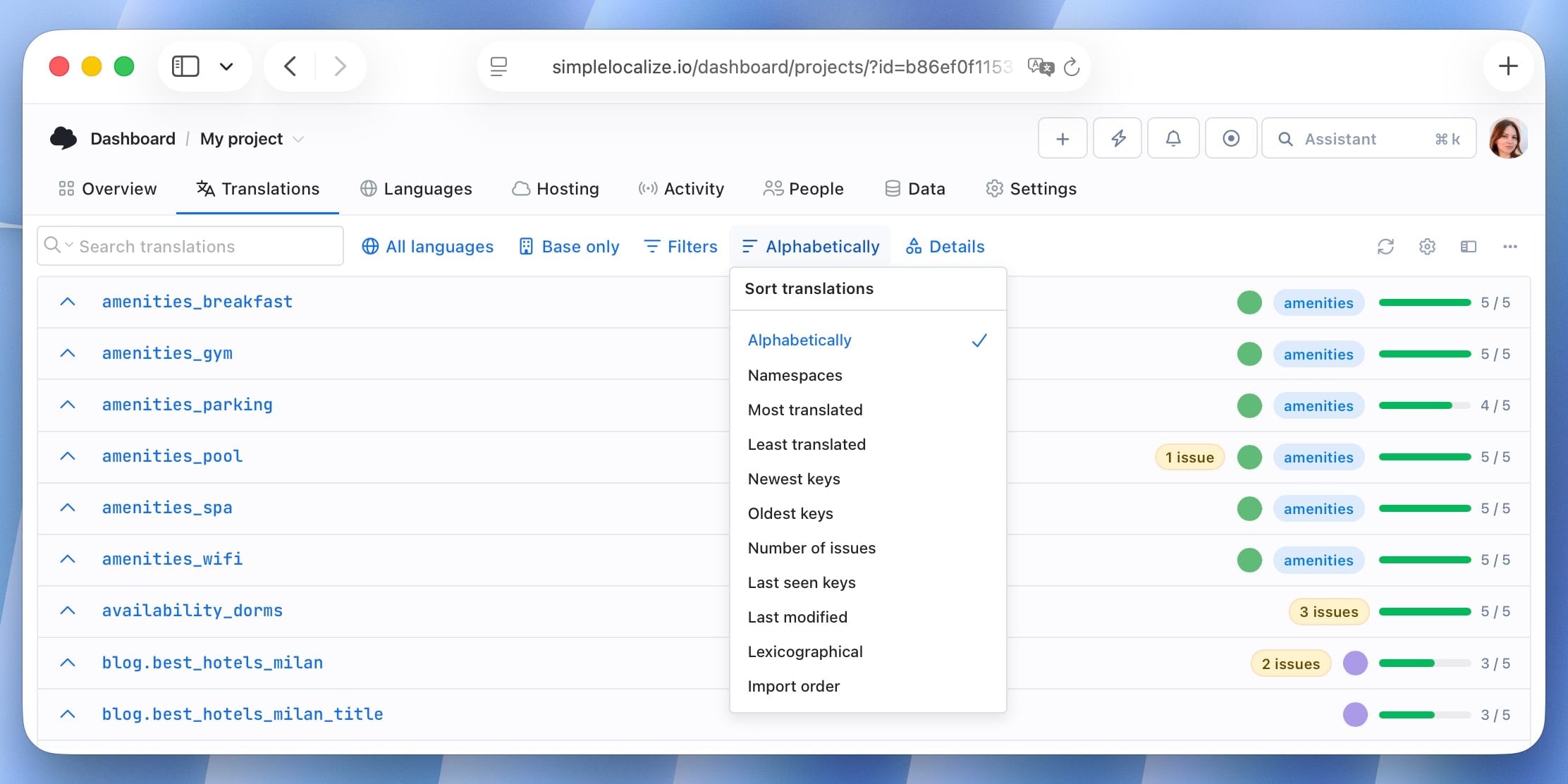
Available sorting options:
- Alphabetically - by the translation key name
- Namespace - By the namespace name alphabetically
- Most translated - by the number translated texts
- Least translated - by the number of untranslated texts
- Newest keys - by the translation key creation date
- Oldest keys - by the translation key creation date
- Number of issues - by the number of issues in QA checks for translations in the key
- Last seen keys - by the translation key last seen in imported file or API
- Last modified - by the last modification date of any translation in the key
- Lexicographically - by the translation key name, but with support for natural sorting (for example, "key1" will be before "key10")
- Import order - by the order of the translation key import
Custom order of translation keys
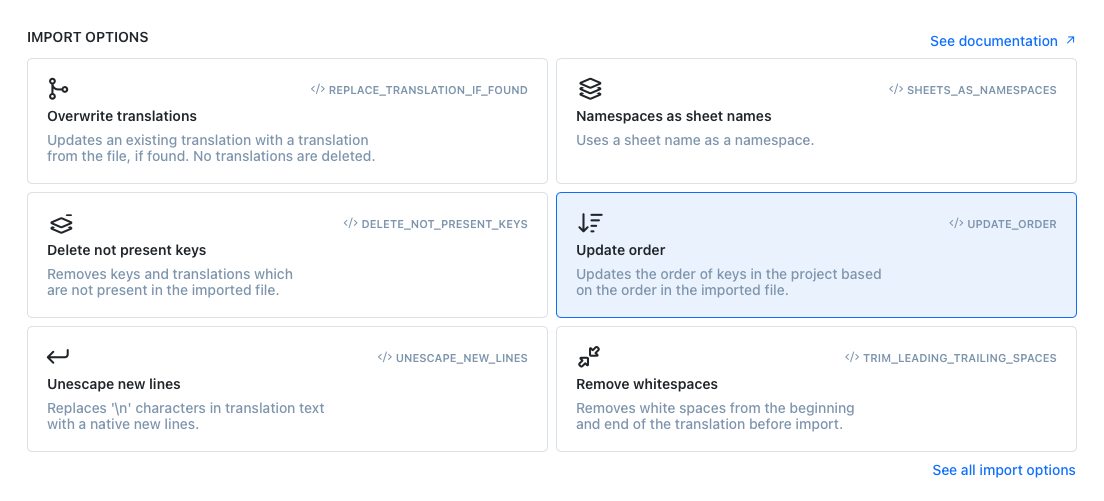
The import order is a custom order of translation keys in the editor. When you import translations, they are sorted by the order from the imported file. You can change the order of translation keys by importing the translation keys in the desired order via "Data" tab, and selecting "Update order" in the import options.
Additional information
You can display additional information for each translation key in the List view using the Details option. This way, without expanding the translation, you can see the selected language translation, creation or last modification date, and auto-translated texts.